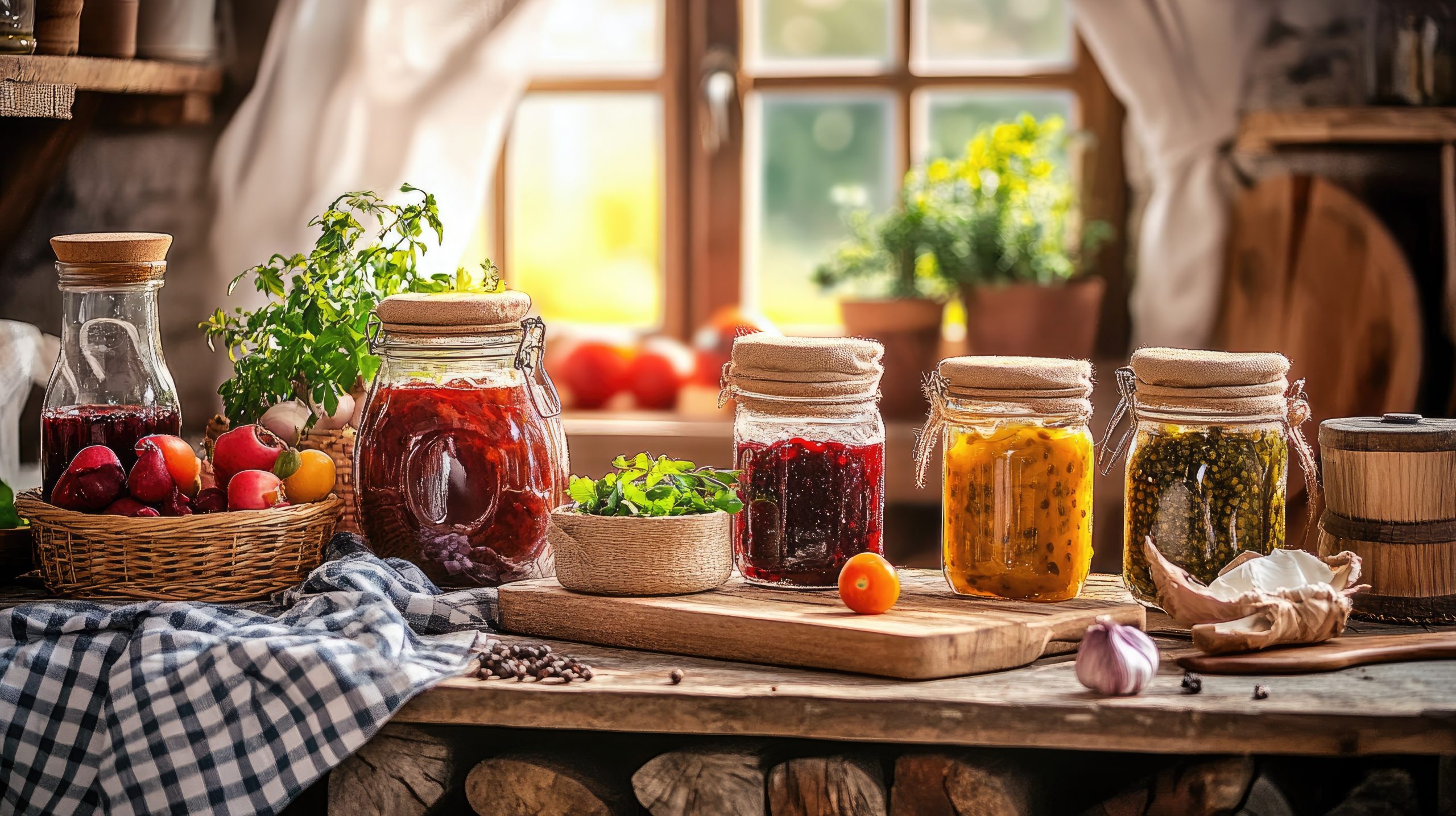
There is something deeply satisfying about turning a bowl of ripe summer fruit into jars of homemade jam. This sense of preserving summer’s best produce is truly special.
Perhaps it’s knowing that the strawberries collected on a sunny afternoon will still be bringing joy on a cold winter morning. Perhaps it’s the comforting rhythm of washing, chopping, stirring and bottling. Or perhaps it’s simply the magic of making something delicious while preventing food waste.
Whatever the reason, when you are preserving summer produce as a seasonal ritual, you make the most of nature’s bounty and enjoy those flavours long after the season has ended.
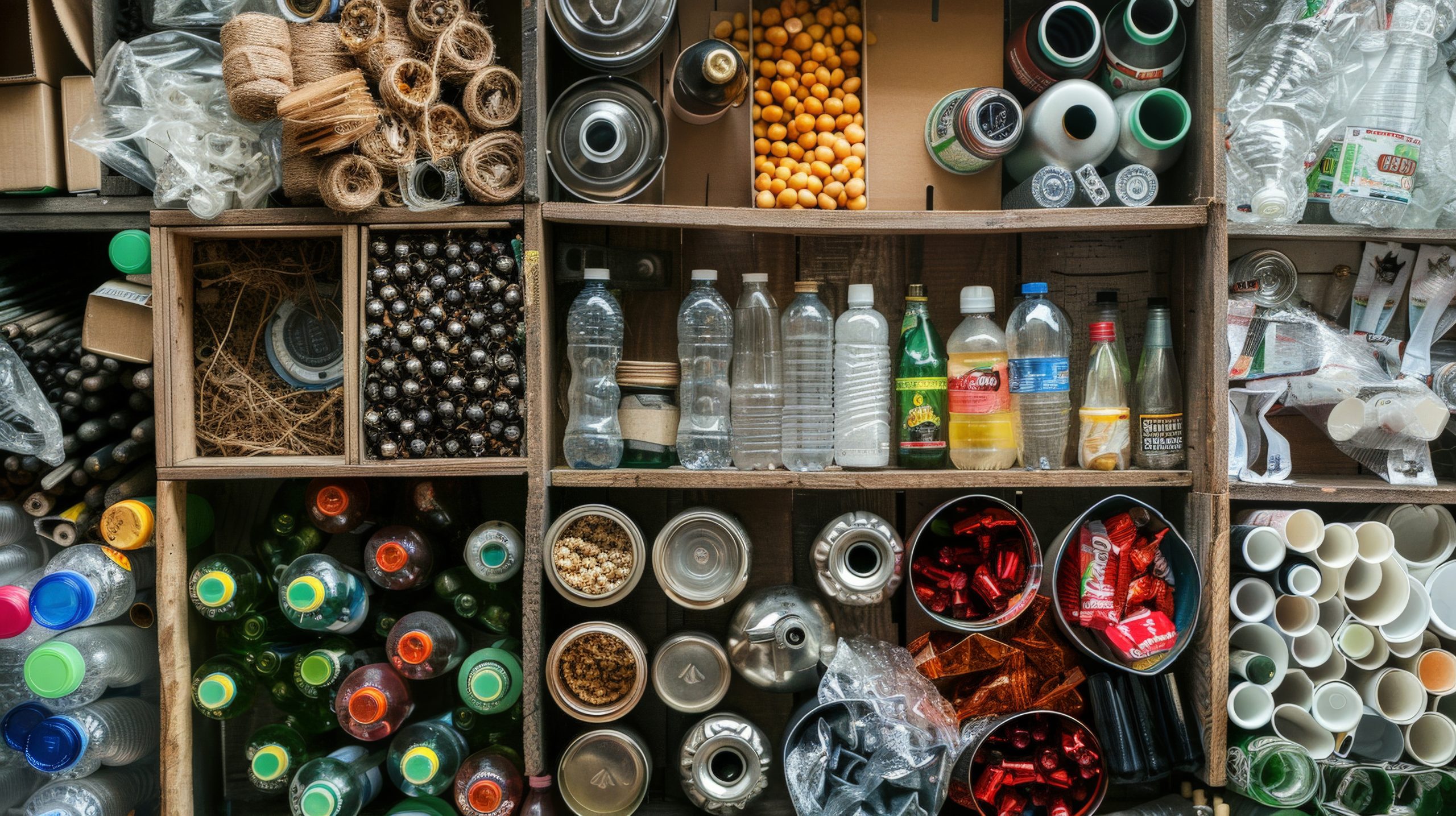
A photo showcasing an innovative recycling or upcycling project, where discarded materials are transformed into valuable products, emphasizing the potential of waste reduction.
Plastic-Free July can feel overwhelming if you think you need to change everything at once. The good news? You don’t. Small swaps and mindful habits add up over time. This challenge calendar is designed to help you take one practical step each day throughout July. Some challenges take just a few minutes, while others may inspire a longer-term change. Pick and choose what works for you, and remember: progress is always better than perfection.
Why Join Plastic-Free July?
Plastic-Free July is a global movement that encourages people to reduce their reliance on single-use plastics. Whether you complete all 31 challenges or just a handful, you’ll become more aware of your consumption habits and discover simple ways to reduce waste.
Festivals are all about freedom, fun, and unforgettable memories — but they can also generate huge amounts of waste. From single‑use plastics to abandoned tents, the environmental impact of festivals is massive. That’s why having an eco‑friendly festival packing list can make a real difference for our planet.
The good news? With a little planning, you can festival responsibly without sacrificing comfort or style.
Here’s your Zero Waste Llama–approved eco‑friendly festival packing list to help you reduce waste, save money, and leave nothing behind but good vibes
Firstly, let me introduce you to Albie, our one-year-old cat. He also answers to many other names: Albus, Albus Dumble-cat, Alfred, Albert, Alberto, Alb and Albachino. In upcoming posts, you’ll find out why we consider him one of our official eco-cats.
This is him — and yes, I’m biased, but isn’t he the cutest?
Naked Sprout bamboo toilet roll is the most eco-friendly toilet roll on the market. Free from plastic, bleach and harsh chemicals.
Sarah and I have been testing it – alongside other eco brands – for some time now. We think that, if you can get past the colour, then a subscription to Naked Sprout is your pathway to a more sustainable lifestyle.
Plastic recycling can feel confusing — even when you’re genuinely trying to do the right thing. That’s why having plastic categories explained is so important. Symbols, numbers, mixed messages from councils, and packaging labelled “recyclable” that still ends up in landfill can make the whole process frustrating.
This guide breaks down the seven main plastic categories, explains what those numbers actually mean, and shows you how to recycle plastic properly in the UK — without wishcycling or guilt. Most importantly, it also looks at how we can reduce plastic use in the first place, because recycling should always be the last resort.
Bamboo is often marketed as a miracle eco‑material — fast‑growing, renewable, and a popular alternative to plastic. But when your bamboo item finally reaches the end of its life, an important question remains: can bamboo actually be composted? The short answer is yes — but not always. Whether bamboo can go in your compost bin depends on how it’s been processed and what it’s mixed with. Understanding the difference is key to making sure your bamboo choices really are as sustainable as they seem. Estimated reading time: 3 minutes ✅ New Section: Is bamboo compostable? In principle, bamboo is a natural, organic material and can be composted. However, many bamboo products are treated or combined with other materials during manufacturing, which affects whether they will break down safely in a compost system. A simple rule of thumb If a bamboo item is made from pure bamboo with no added materials, it can usually be composted. If it contains glue, paint, plastic, metal, or synthetic fibres, it should not go straight into your compost bin. When in doubt, always check the product description or contact the brand directly. ✅ New Section: Bamboo composting checklist Before composting any bamboo item, ask yourself the following: ✅ Is it made from 100% bamboo? ✅ Is it untreated (no paint, varnish, or sealant)? ✅ Does it contain no plastic, metal, or synthetic fibres? ❌ No glue, resins, or bonding agents? ❌ No composite bamboo fibres mixed with melamine or plastics? If you can confidently tick…
Around the house, there’s a lot of potential to waste food and food scraps. However, did you know you can help the environment, sustain your garden, reduce food waste and save money gardening all at once through composting?
What is composting? It is a
natural process that turns organic matter to compost or “humus”. It is all
about microbial activity. When your food and garden waste are put together, the
bacteria present in the soil will break down the matter, turning it into
compost. This can then be used as a fertiliser giving rich nutrients to your
plants and condition the soil for planting.
Poor soil can hinder or prevent plant growth so it’s always best to have an idea of the kind of soil you have in your garden. If you’re not sure, you might want to give soil testing a try, either using a kit or a DIY method. These tests can also reveal what kind of pH your soil is, which also has a big effect on whether your plants will grow or not.
Compost can be used to improve
your soil quality, and if you do it at home you’ll get compost for free instead
of having to buy it from a shop.
Composting is satisfying because,
not only will it help you in terms of cultivation, it will also help you in
reducing food waste that ends up in landfill. You’ll be doing your bit to fight
the pollution problem.
Composting at home may sound daunting, and many assume it to be dirty or smelly, but this doesn’t have to be the case if you manage your compost pile properly.
Well, I think I achieved about an 80% reduction in waste – I did not reach my goal, but this is just the beginning. Taking a zero waste pledge has been an important step in my journey. In fact, the zero waste pledge continues to inspire me to make better choices.
The festive period, of course, was the source of many additional waste – but even so, I still managed to only have half bag of household (non-recycling) waste , and half-full recycling boxes for the last collection of the year – and of course, much of this was from gifts and packaging which I was not in control of. I am quite proud of myself! I honestly think that if I had set this goal earlier, without the festive period, that I would have achieved the 85%! Making this commitment to a pledge for zero waste has made me more mindful in everyday situations.
I am trying my utmost to reduce my waste by 85% before the end of the year. This post is an update on my zero waste pledge progress. It is not that I never recycled (I always have done!), or that I was particularly wasteful, but that there is more that I can do.
What is in place
Avoidance of ANY purchases with plastic packaging (yes, this causes funny looks in Tesco when I have veg loose in a bag for life, but what is the point in putting them in plastic for a 5 min journey, when I already have a canvas carrying implement?!)
Up-cycling of anything possible: for a friends kids to make stuff with (the cardboard rolls in the middle of wrapping paper are, e.g. excellent swords!)
Re-use of boxes and envelopes.
Slow integration of alternative products with waste reduction and environmental friendliness as core motivations for choice.