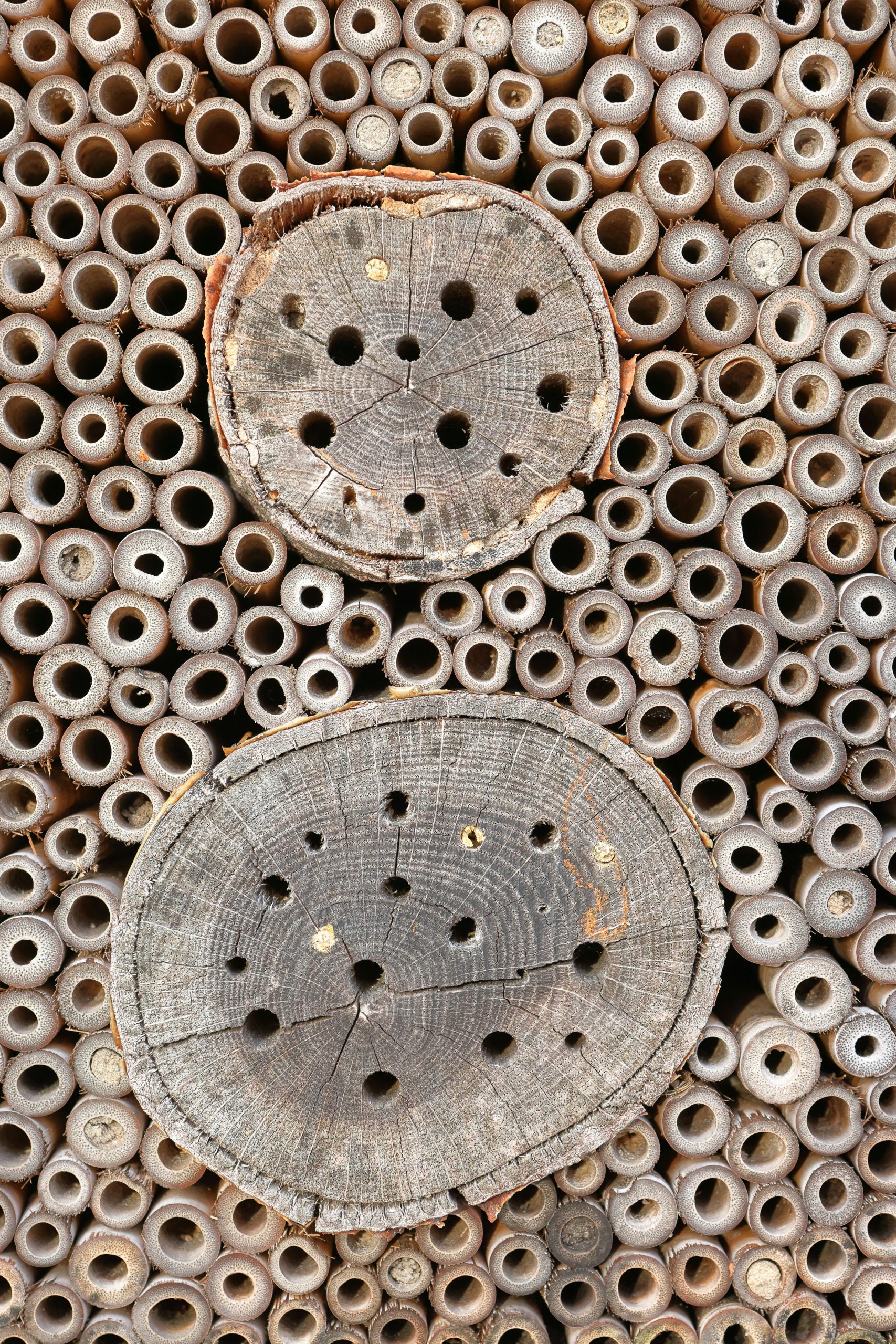
Bee hotels are everywhere now — in garden centres, supermarkets, and social media posts. They’re often sold as an easy way to “save the bees”.
But good intentions don’t always help.
Some bee hotels can support wildlife. Others do very little — and some can even cause harm. Here’s what actually helps solitary bees in the UK, and what to be cautious about.
Bees in the UK are under real pressure from habitat loss, pesticides, and a lack of diverse flowering plants. The good news? Even small gardens, balconies, patios, and window boxes can become vital lifelines, and creating bee‑friendly gardens UK wide is more important than ever.
You don’t need a wildflower meadow or perfect planting scheme. A bee‑friendly garden is about making space for nature, not controlling it. Here’s how to create one that actually helps.
Around the house, there’s a lot of potential to waste food and food scraps. However, did you know you can help the environment, sustain your garden, reduce food waste and save money gardening all at once through composting?
What is composting? It is a
natural process that turns organic matter to compost or “humus”. It is all
about microbial activity. When your food and garden waste are put together, the
bacteria present in the soil will break down the matter, turning it into
compost. This can then be used as a fertiliser giving rich nutrients to your
plants and condition the soil for planting.
Poor soil can hinder or prevent plant growth so it’s always best to have an idea of the kind of soil you have in your garden. If you’re not sure, you might want to give soil testing a try, either using a kit or a DIY method. These tests can also reveal what kind of pH your soil is, which also has a big effect on whether your plants will grow or not.
Compost can be used to improve
your soil quality, and if you do it at home you’ll get compost for free instead
of having to buy it from a shop.
Composting is satisfying because,
not only will it help you in terms of cultivation, it will also help you in
reducing food waste that ends up in landfill. You’ll be doing your bit to fight
the pollution problem.
Composting at home may sound daunting, and many assume it to be dirty or smelly, but this doesn’t have to be the case if you manage your compost pile properly.