Firstly, let me introduce you to Albie, our one-year-old cat. He also answers to many other names: Albus, Albus Dumble-cat, Alfred, Albert, Alberto, Alb and Albachino. In upcoming posts, you’ll find out why we consider him one of our official eco-cats.
This is him — and yes, I’m biased, but isn’t he the cutest?
If you share your life with a dog or cat, you’ll know the feeling: you’re doing your best to live more sustainably, carefully sorting your recycling… and then you pick up an empty pet food bag and realise you have no idea what to do with it. The TerraCycle pet food recycling programme makes it easier to dispose of these tricky empty bags in an environmentally friendly way.
Pet food packaging is notoriously difficult to recycle. Those shiny pouches, multi-layer bags, and treat wrappers are designed to keep food fresh, not to make life easy once they’re empty. For years, this type of packaging has almost always ended up in landfill or incineration.
World Bamboo Day is celebrated every year on 18th September to raise global awareness of bamboo and highlight its vital role as one of the world’s most sustainable natural resources. In regions where bamboo grows naturally, it has been used for centuries in everyday life — from building materials and tools to household items, textiles, and food.
However, bamboo has not always been utilised sustainably. Over‑exploitation and poor management have caused environmental and social issues in some areas. As technology advances and greener innovations emerge, bamboo is now being reintroduced to global markets in a far more responsible and forward‑thinking way.
Today, bamboo products are more widely available than ever before, gaining acceptance across households, industries, and architectural design. From eco‑friendly toothbrushes and cutlery to construction materials and fabrics, bamboo is actively changing how we build, consume, and live within our environment.
Plastic recycling can feel confusing — even when you’re genuinely trying to do the right thing. That’s why having plastic categories explained is so important. Symbols, numbers, mixed messages from councils, and packaging labelled “recyclable” that still ends up in landfill can make the whole process frustrating.
This guide breaks down the seven main plastic categories, explains what those numbers actually mean, and shows you how to recycle plastic properly in the UK — without wishcycling or guilt. Most importantly, it also looks at how we can reduce plastic use in the first place, because recycling should always be the last resort.
Bamboo is often marketed as a miracle eco‑material — fast‑growing, renewable, and a popular alternative to plastic. But when your bamboo item finally reaches the end of its life, an important question remains: can bamboo actually be composted? The short answer is yes — but not always. Whether bamboo can go in your compost bin depends on how it’s been processed and what it’s mixed with. Understanding the difference is key to making sure your bamboo choices really are as sustainable as they seem. Estimated reading time: 3 minutes ✅ New Section: Is bamboo compostable? In principle, bamboo is a natural, organic material and can be composted. However, many bamboo products are treated or combined with other materials during manufacturing, which affects whether they will break down safely in a compost system. A simple rule of thumb If a bamboo item is made from pure bamboo with no added materials, it can usually be composted. If it contains glue, paint, plastic, metal, or synthetic fibres, it should not go straight into your compost bin. When in doubt, always check the product description or contact the brand directly. ✅ New Section: Bamboo composting checklist Before composting any bamboo item, ask yourself the following: ✅ Is it made from 100% bamboo? ✅ Is it untreated (no paint, varnish, or sealant)? ✅ Does it contain no plastic, metal, or synthetic fibres? ❌ No glue, resins, or bonding agents? ❌ No composite bamboo fibres mixed with melamine or plastics? If you can confidently tick…
Plastic straws might seem small, but their environmental impact is anything but. Billions are used globally each year, often for just minutes, before ending up in landfill, incineration, rivers, or the ocean. While reusable alternatives like metal, glass, and silicone straws are growing in popularity, bamboo straws stand out as one of the most genuinely sustainable options. One brilliant idea is to plant bamboo for straws, supporting an eco-friendly cycle from the source to the finished product.
Bamboo is fast‑growing, renewable, and naturally biodegradable. It requires no pesticides, very little water, and absorbs more carbon dioxide than many trees. When responsibly grown, bamboo can be harvested without killing the plant — making it an ideal material for zero‑waste products.
World Bamboo Day, celebrated annually on 18th September, is dedicated to raising awareness of bamboo and its importance in promoting sustainability, biodiversity, and climate‑positive lifestyles.
Bamboo is often described as one of the most sustainable materials on the planet – and for good reason. It is technically a grass, not a tree, and can grow incredibly quickly without the need for pesticides or fertilisers. Furthermore, in some species, bamboo can grow up to one metre per day, making it a renewable resource with huge potential to reduce our reliance on less sustainable materials.
From a zero‑waste perspective, bamboo really stands out. It is biodegradable, versatile, and naturally strong, which means it can be used to replace plastics and other high‑impact materials in many everyday products. From bamboo toothbrushes and reusable kitchenware to textiles and flooring, bamboo alternatives are becoming increasingly accessible.
If you’re trying to reduce waste at home, your daily cup of tea is a surprisingly powerful place to start. In this post, we look at loose leaf tea vs teabags — from flavour and freshness to hidden plastics, cost, and environmental impact. This will help you decide which is the better zero-waste choice.
I never gave tea-types much thought, until I lived in Hamburg, Germany (2000-2007). Tea was something that automatically came in teabags – I popped it in a teapot or cup, added hot water and let it brew. For me, varieties of tea (up to the year 2000) consisted of Tetleys, PG Tips and herbal (mostly chamomile). These ALWAYS came in a bag!
When I moved to Germany, a whole new world opened: Tea shops are common in towns and cities. In fact, Hamburg, being the largest port in Germany, had more than its fair share. A quick search on google showed me well over 100! There were more tea varieties than I had ever seen before in my life! And very few in bags! Rows and rows of large jars adorn these shops. You can ask about the origin or flavours of any of them – and/or have a sniff! Every time I return, I come back with kilos of it! From whole leaf Lemon Verbena, to mixes of loose teas with roses…. It is part of my life and routine now. Although I admit, I am more of a coffee drinker!
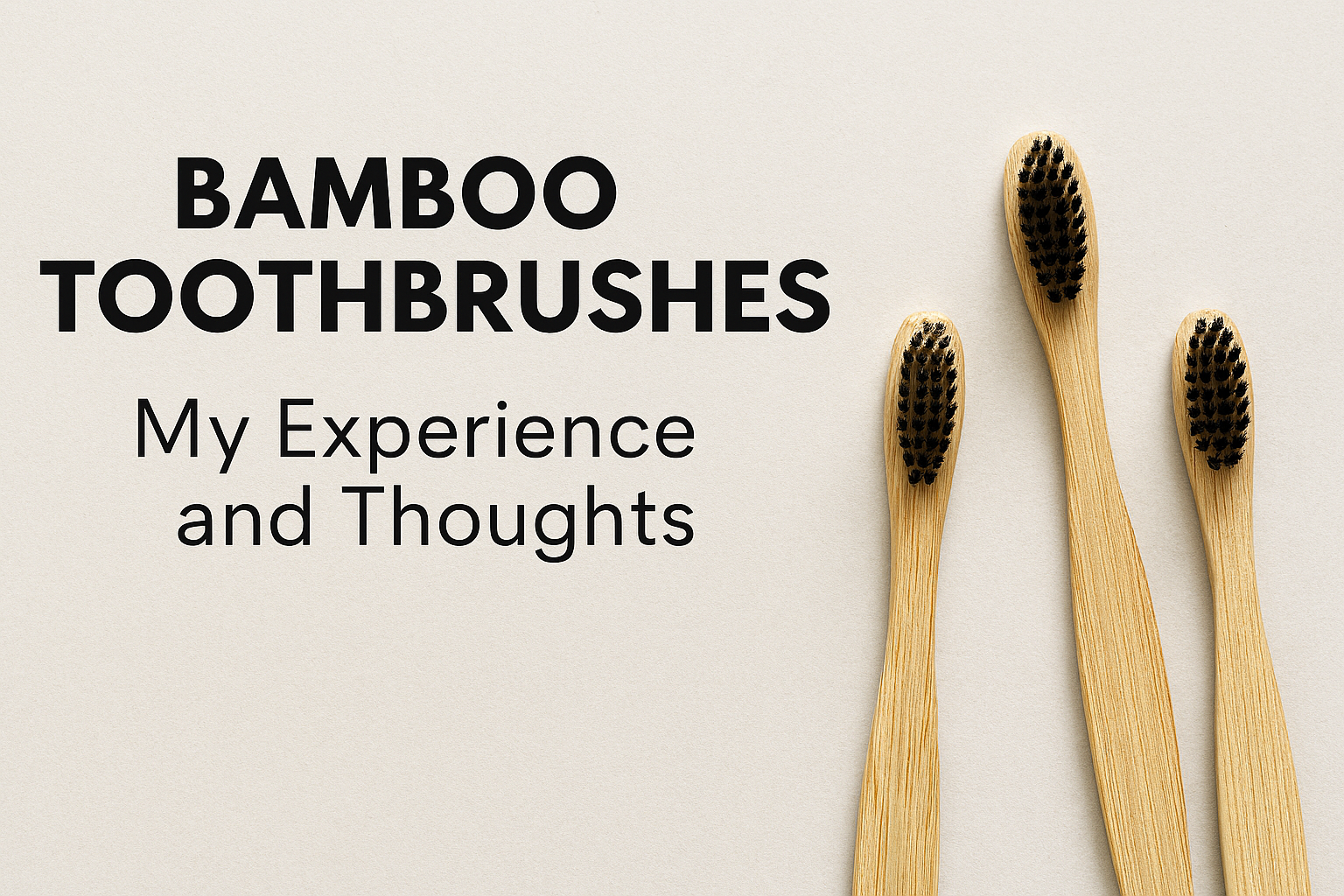
Over the past 6–9 months, I’ve tried a variety of bamboo toothbrushes. Overall, I’ve found that they wear well, do the job just as effectively as conventional plastic toothbrushes, feel nice to hold, and — most importantly for me — can usually be disposed of with a much clearer conscience. Switching to a bamboo toothbrush is often one of the first swaps people make when trying to reduce plastic waste, and for good reason. However, as I’ve learned, not all bamboo toothbrushes are created equal, and some marketing claims deserve a closer look. Estimated reading time: 5 minutes ✅ Why Bamboo Toothbrushes Are a Popular Zero‑Waste Swap Traditional plastic toothbrushes are almost impossible to recycle and are typically destined for landfill or the ocean. Bamboo toothbrushes, on the other hand, are often promoted as a more sustainable alternative because: Bamboo is a fast‑growing, renewable resource Handles are usually biodegradable or compostable Many brands use plastic‑free or recyclable packaging From a zero‑waste perspective, they’re a clear improvement — but that doesn’t mean they’re perfect. My Experience with Bamboo Toothbrushes Charcoal bristles are often advertised as antibacterial and better at removing plaque. Personally, I did notice that my teeth felt cleaner when using charcoal bristles. However, I later discovered that “BPA‑free charcoal bristles” may still contain synthetic materials, meaning the toothbrush is not fully compostable. ♻️ Are Bamboo Toothbrushes Actually Compostable? All of the bamboo toothbrushes I’ve tried have performed well and felt comparable to standard plastic toothbrushes. I didn’t feel like…