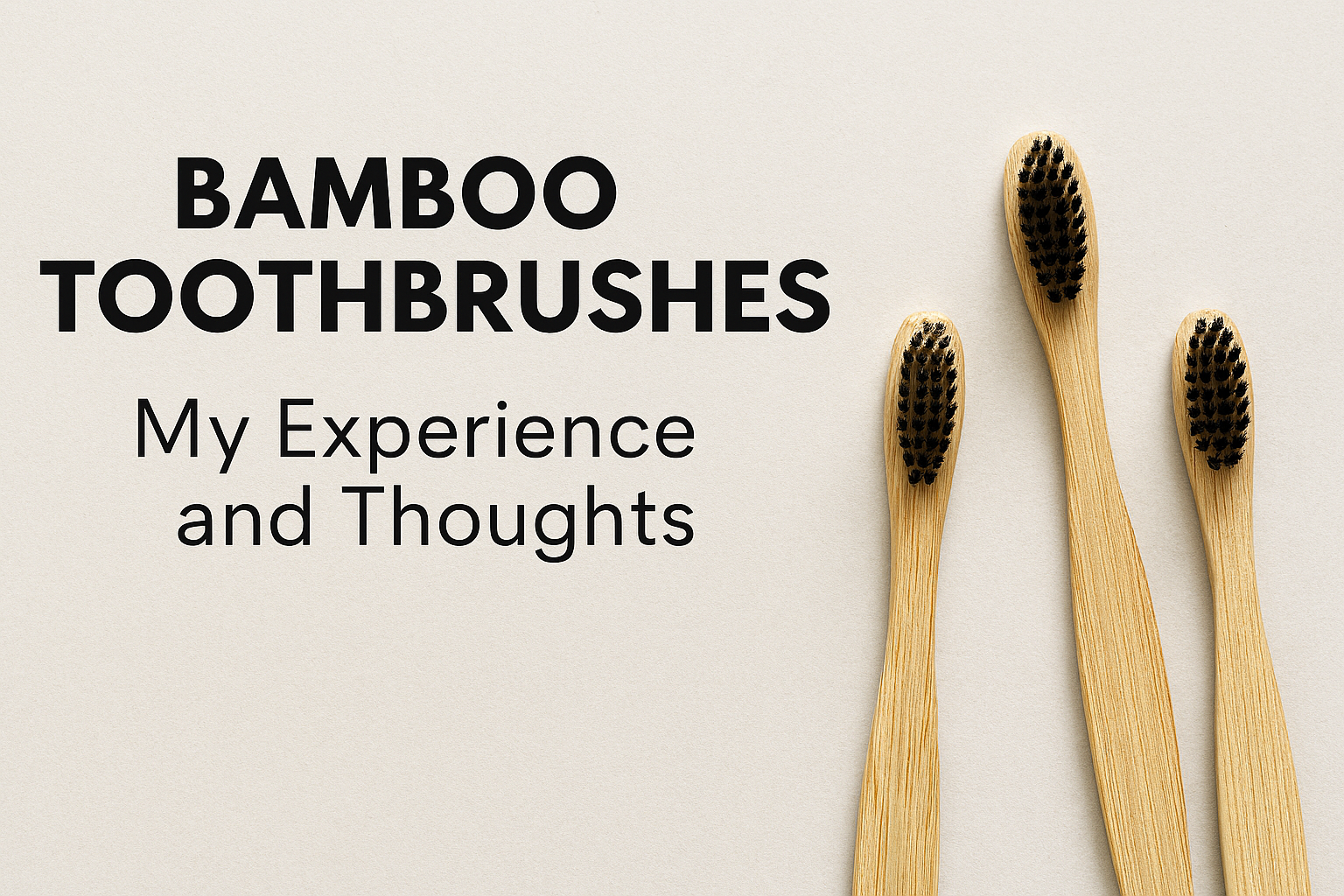
Over the past 6–9 months, I’ve tried a variety of bamboo toothbrushes. Overall, I’ve found that they wear well, do the job just as effectively as conventional plastic toothbrushes, feel nice to hold, and — most importantly for me — can usually be disposed of with a much clearer conscience.
Switching to a bamboo toothbrush is often one of the first swaps people make when trying to reduce plastic waste, and for good reason. However, as I’ve learned, not all bamboo toothbrushes are created equal, and some marketing claims deserve a closer look.
Estimated reading time: 5 minutes
Read more: Bamboo Toothbrushes✅ Why Bamboo Toothbrushes Are a Popular Zero‑Waste Swap
Traditional plastic toothbrushes are almost impossible to recycle and are typically destined for landfill or the ocean. Bamboo toothbrushes, on the other hand, are often promoted as a more sustainable alternative because:
- Bamboo is a fast‑growing, renewable resource
- Handles are usually biodegradable or compostable
- Many brands use plastic‑free or recyclable packaging
From a zero‑waste perspective, they’re a clear improvement — but that doesn’t mean they’re perfect.
My Experience with Bamboo Toothbrushes
Charcoal bristles are often advertised as antibacterial and better at removing plaque. Personally, I did notice that my teeth felt cleaner when using charcoal bristles. However, I later discovered that “BPA‑free charcoal bristles” may still contain synthetic materials, meaning the toothbrush is not fully compostable.
♻️ Are Bamboo Toothbrushes Actually Compostable?
All of the bamboo toothbrushes I’ve tried have performed well and felt comparable to standard plastic toothbrushes. I didn’t feel like I was sacrificing comfort or cleanliness, which is always a concern with eco swaps.
That said, my favourite so far has been the bamboo toothbrush with charcoal bristles by TEVRA. I noticed that my teeth genuinely felt cleaner when using charcoal bristles, and the brush itself felt well made and comfortable to use.
Additional Attributes (as advertised)
- Plastic‑free
- Zero waste (packaged in recyclable materials)
- Dentist approved, using high‑quality dental‑grade bristles
- Medium bristles — firm enough to clean effectively while still being gentle on enamel
- Money‑back guarantee if you’re not satisfied
At face value, it sounded like the ideal zero‑waste toothbrush.
Charcoal Bristles: Benefits and Concerns
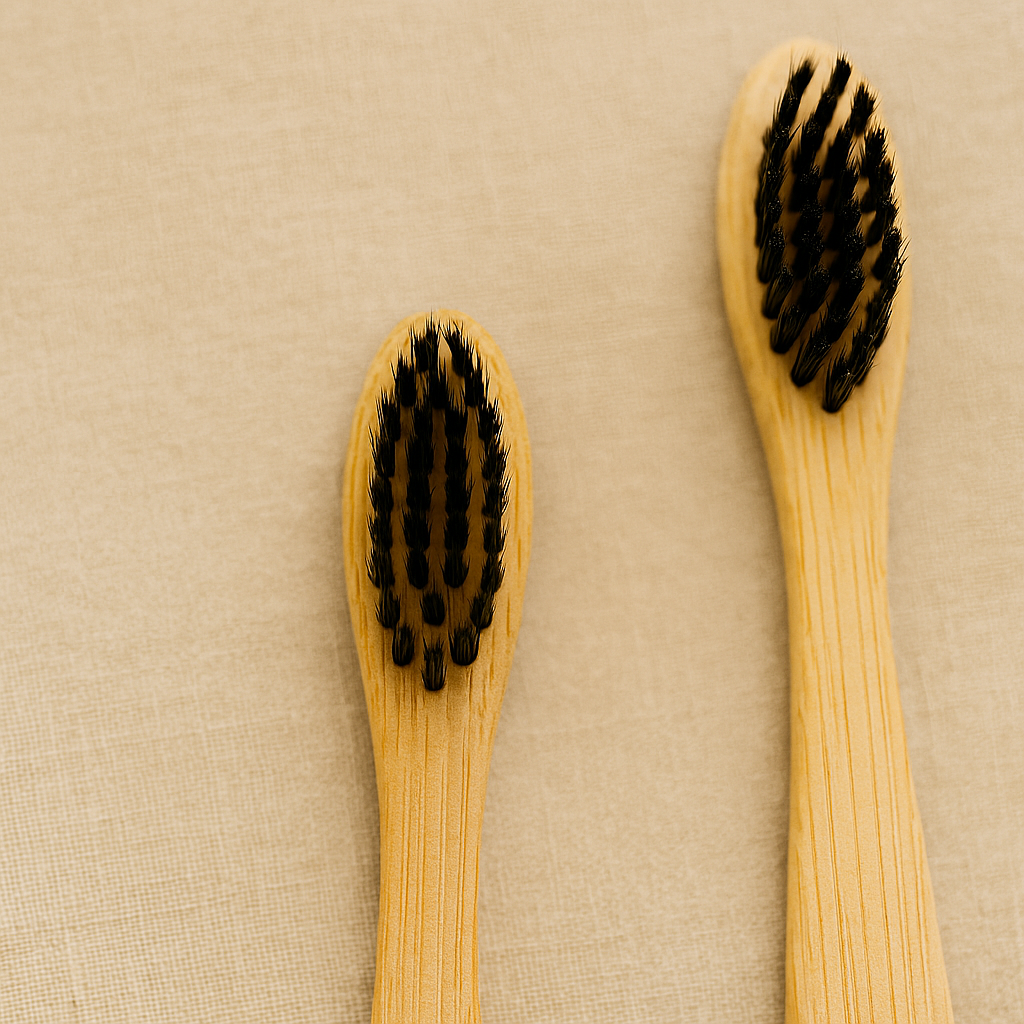
Charcoal bristles are often marketed as antibacterial and better at removing plaque and odours. From a personal perspective, I did enjoy using them and felt they gave a very thorough clean.
However — and this is important — I later discovered that the charcoal bristles I preferred were described as “BPA‑free charcoal” rather than plastic‑free.
After doing a simple flame test, I found that the bristles melted rather than burned, which strongly suggests the presence of synthetic material, likely polyester. This means that despite how they are often marketed, these toothbrushes are not 100% compostable.
Are Bamboo Toothbrushes Actually Compostable?
This is where things get a little murky.
In most cases:
- ✅ The bamboo handle is compostable
- ❌ The bristles are not
For a toothbrush to be composted properly, the bristles usually need to be removed first — something that isn’t always made clear in product descriptions. This lack of transparency can be frustrating for anyone trying to live as close to zero waste as possible.
While a bamboo toothbrush is still a step in the right direction, it’s important to understand that “bamboo” does not automatically mean “fully compostable”.
A Note on Honest Marketing
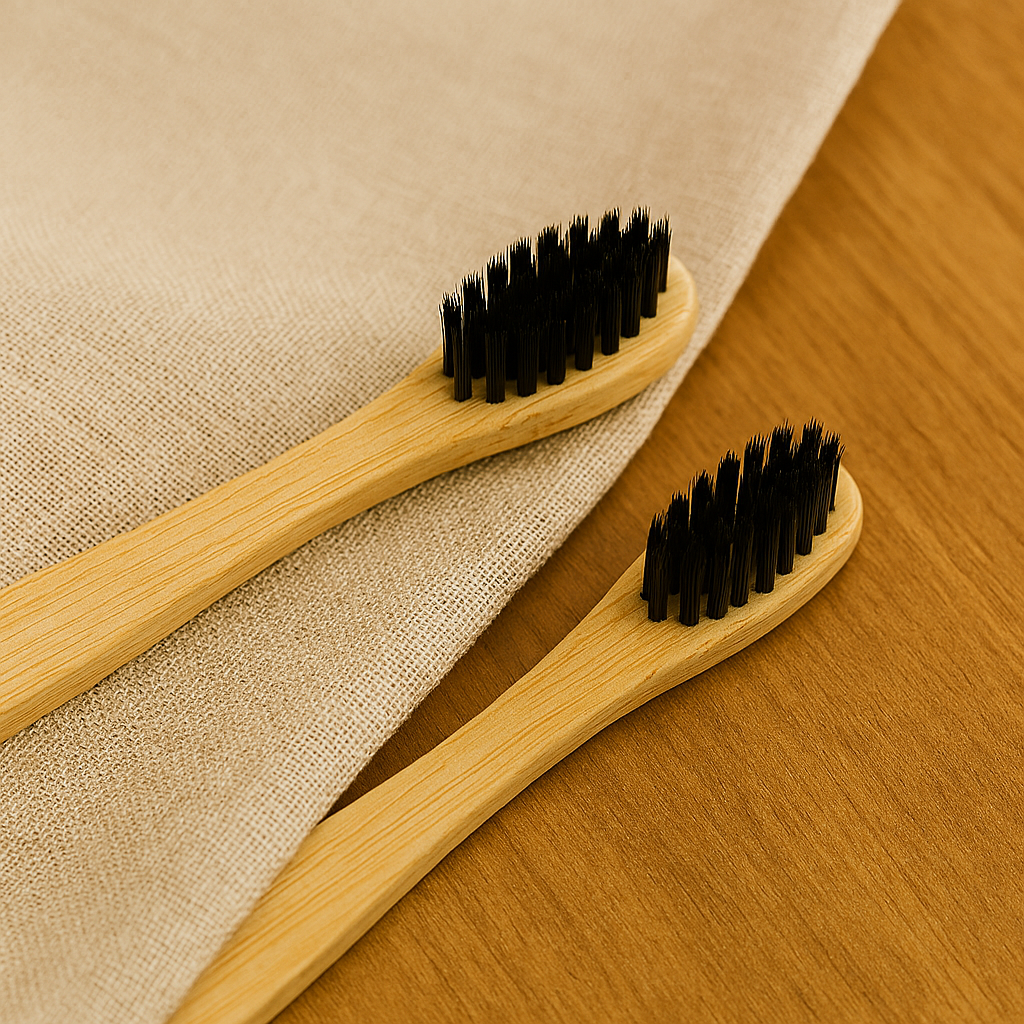
I was disappointed to realise that the toothbrushes I bought most often — and genuinely liked — weren’t quite what they were advertised to be. While they were described as eco‑friendly and zero waste, the reality was more complicated.
That doesn’t mean they’re a bad product, but it does highlight how careful we need to be with sustainability claims.
What I’m Looking for Next
I’m now planning to contact toothbrush manufacturers directly to ask clearer questions about their materials. Ideally, I’m looking for a toothbrush that is:
- Truly compostable or clearly biodegradable
- Transparent about bristle materials
- Packaged without plastic
- Honest and specific in its marketing
Final Thoughts
Bamboo toothbrushes are still a positive and accessible eco swap, especially compared to traditional plastic toothbrushes. However, they aren’t a perfect solution — and that’s okay.
Living more sustainably isn’t about perfection. It’s about learning, questioning marketing claims, and making better choices where we can. I’ll continue testing options, asking awkward questions, and updating this post as I find genuinely compostable alternatives.
Key Takeaways
- Bamboo toothbrushes offer a more sustainable alternative to plastic toothbrushes but vary in quality and marketing claims.
- Charcoal bristles can enhance cleaning but may still contain synthetic materials, making the toothbrush not fully compostable.
- Only the bamboo handle is compostable; bristles often require removal for proper composting, which is rarely mentioned in descriptions.
- Despite being a step towards sustainability, bamboo toothbrushes may not always meet expectations, highlighting the need for transparency in marketing.
- Moving forward, it’s essential to seek truly compostable options and ask manufacturers for clear information about materials.


Pingback: #PlantBamboo, #UseBamboo, #CompostBamboo – Zero Waste Llama
Pingback: World Bamboo Day 18th September 2022 - Zero Waste Llama
Pingback: Product Review: Naked Sprout Toilet Paper - Zero Waste Llama