

There are plenty of things we can legitimately disagree about when it comes to climate change.
We can debate how quickly we should cut emissions. However, it is important to acknowledge that climate change denial still influences much of this debate.
We can argue about nuclear power, wind farms, electric cars, heat pumps, flying, meat, carbon taxes and whether various net-zero policies actually work. We can ask who should pay.
We absolutely should question governments, businesses, journalists and environmental organisations. Healthy scepticism is a good thing.
But there is an enormous difference between questioning a particular climate policy and rejecting the overwhelming scientific evidence that humans are changing the climate. Because the stakes here are extraordinarily high.
We’re not talking about a policy we can reverse after the next election. We’re talking about the physical systems that allow billions of human beings to grow food, find water, build homes, maintain economies and live together in functioning societies.
And we only have one planet on which to conduct this particular experiment.
Yes, the climate has changed before
Let’s start with one of the most common objections to climate science:
“The climate has always changed.”
Yes. It has. Scientists know this remarkably well.
Earth has experienced ice ages and warm periods. Continents have moved. Volcanic eruptions have altered the atmosphere. Earth’s orbit varies. Solar activity changes. Oceans and atmosphere interact to create natural variability.
Climate can therefore change naturally across many timescales. Climate scientists don’t deny any of this. They are the scientists who discovered much of it.
The important question isn’t:
Has Earth’s climate ever changed naturally?
Of course it has.
The important question is:
What is causing the rapid warming happening now?
And that’s where the evidence becomes overwhelming.
Estimated reading time: 24 minutes
NASA explains that multiple independent lines of evidence demonstrate that human activity, principally the burning of fossil fuels, is driving modern global warming. Its scientific-consensus summary notes that the Intergovernmental Panel on Climate Change has described human influence on the climate as having moved from theory to established fact. [science.nasa.gov]
Read NASA’s Scientific Consensus page
This isn’t the conclusion of one university, one government or one computer model.
It’s the conclusion produced by decades of observations of our atmosphere, oceans, ice, land, greenhouse gases and climate history.
Is There Really a Scientific Consensus on Climate Change?
Of course scientists disagree. That’s literally part of science.
Scientists argue about climate sensitivity, regional effects, feedback mechanisms, the likely impact of individual policies and exactly how particular parts of the climate system may respond.
What they don’t have is a meaningful scientific disagreement about whether human greenhouse-gas emissions are warming the planet.
A 2021 study published in Environmental Research Letters searched a database containing 88,125 climate-related scientific papers published since 2012.
The researchers estimated that the consensus in the peer-reviewed literature that modern climate change is human-caused was greater than 99%. [iopscience.iop.org]
That’s an important distinction.
You will sometimes see people say:
“99.9% of all scientists agree.”
That isn’t quite what the research measured.
The stronger and more accurate statement is:
More than 99% of the peer-reviewed scientific literature supports the conclusion that modern climate change is human-caused. [iopscience.iop.org]
And if we’re going to challenge climate misinformation, I think it’s important that we are equally rigorous with claims made by our own side.
The Evidence for Human-Caused Climate Change
Meanwhile, the planet keeps keeping score. Climate change isn’t something computer models say might begin one day.
We’re measuring it.
According to the World Meteorological Organization’s State of the Global Climate 2025, 2015 to 2025 were the hottest 11 years in the observational record.
Global temperature in 2025 was around 1.43°C above the 1850–1900 average. [wmo.int], [wmo.int]
But temperature is only one measurement.
The same assessment reports that:
- ocean heat content reached its highest level in the 66-year observational record;
- global sea level remained close to record highs;
- the Arctic sea-ice maximum reached a record low;
- glacier losses remained extraordinarily severe; and
- Earth’s measured energy imbalance reached a record high. [wmo.int]
Sea level is particularly revealing.
The World Meteorological Organization reports that average sea level rose at approximately 4.75 millimetres per year between 2012 and 2025.
Between 1993 and 2011, the rate was approximately 2.65 millimetres per year. [wmo.int]
In other words, the rate has increased substantially.
That’s not politics.
That’s measurement.
Why Climate Change Denial and Misinformation Are Dangerous
Imagine your child became seriously ill.
A doctor examines them and recommends urgent treatment. Understandably frightened, you get a second opinion.
The second doctor reaches essentially the same diagnosis.
So you ask a third. Same conclusion.
Then a fourth. Same answer again.
But you don’t like the diagnosis. So you keep searching. Eventually you find someone who tells you what you desperately want to hear:
“Don’t worry. Everyone else is exaggerating. Your child is fine.”
Would choosing that one comforting opinion over all the others really constitute healthy scepticism? Or would the sensible thing be to recognise where the overwhelming weight of expert evidence lies?
And while all that searching and arguing continues, the illness doesn’t politely stop progressing.
That’s an imperfect analogy, but it explains something important about climate change. We’ve spent decades examining the evidence. And meanwhile, greenhouse gases continue accumulating.
Were Past Climate Change Models Accurate?
Another familiar argument goes something like this:
“Climate models are always wrong.”
Scientific models aren’t crystal balls.
Nor are they expected to reproduce every annual fluctuation in global weather.
They’re tools for testing how the physical climate system responds under different conditions.
And there’s rather a useful way of finding out whether old climate models were any good.
Wait several decades and compare their projections with what actually happened.
That’s exactly what scientists did.
A 2020 study led by Zeke Hausfather evaluated climate models published between 1970 and 2007 and compared their projections with subsequently observed global temperatures.
The researchers concluded that the models had generally been skilful in projecting global temperature change, particularly after taking into account differences between the greenhouse-gas emissions and other external influences originally assumed by the models and what actually occurred. [giss.nasa.gov]
Read the NASA Goddard Institute for Space Studies summary
That’s science doing precisely what science should do:
- Make predictions.
- Collect evidence.
- Test the predictions.
- Revise where necessary.
This isn’t about Britain getting nicer summers
One of the great problems with the phrase global warming is that it can sound rather pleasant when you’re sitting in Aberdeenshire.
A couple more sunny afternoons?
Yes please.
Unfortunately, that’s not how the climate system works.
An increase in average temperature changes the probability and severity of other things.
- Heatwaves.
- Heavy rainfall.
- Drought.
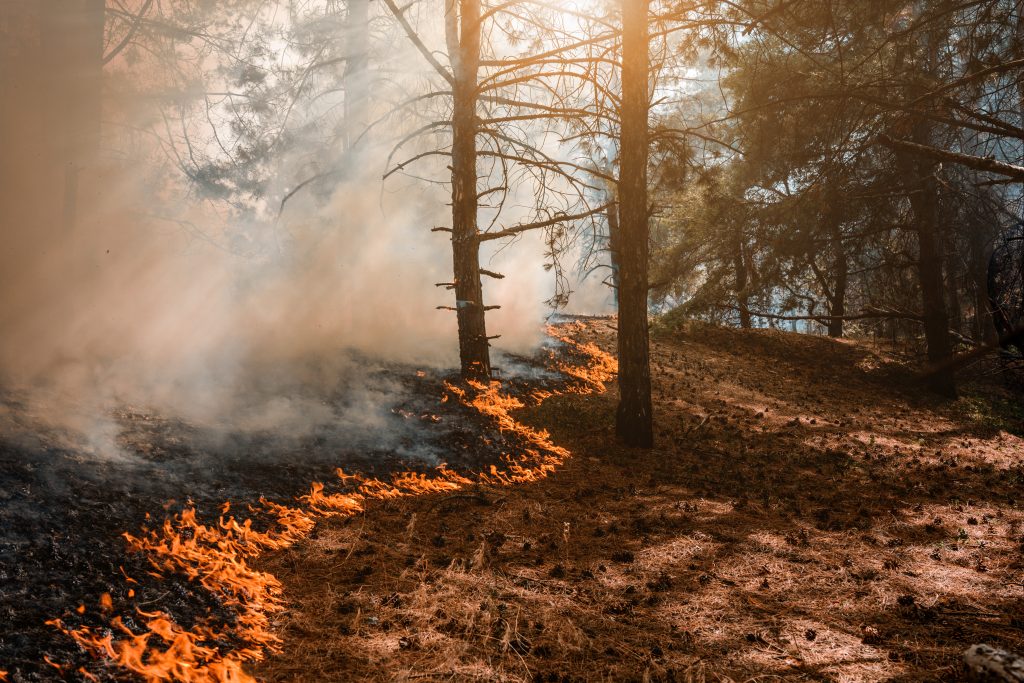
- Wildfire conditions.
- Water availability.
- Ice loss.
- Ocean heat.
- Sea level.
- Agricultural conditions.
- Ecosystems.
And the risks increase further as the planet warms.
The IPCC Sixth Assessment Report assesses the evidence across physical climate science, ecosystems, human vulnerability, adaptation and mitigation.
It concludes that climate risks generally become increasingly severe with additional warming. [ipcc.ch]
Explore the IPCC Sixth Assessment Report
Every fraction of a degree matters.
Extreme weather existed before climate change
Yes. Of course it did.
- Floods aren’t new.
- Heatwaves aren’t new.
- Droughts aren’t new.
- Wildfires aren’t new.
The scientifically interesting question isn’t:
“Has this type of weather ever happened before?”
It’s:
“Has human-caused climate change altered the probability or intensity of this type of event?”
Think of loading a pair of dice.
Rolling a six was possible before you tampered with them.
If you alter the dice so sixes occur much more frequently, the existence of sixes beforehand doesn’t demonstrate that nothing has changed.
Climate attribution science asks a similar question about extreme events.
For some kinds of extremes, particularly heat, the influence of warming is especially clear.
How Climate Change Threatens Food Security
Think about everything needed to maintain a modern food system.
- Suitable temperatures.
- Predictable seasons.
- Rainfall.
- Fresh water.
- Healthy soil.
- Pollinators.
- Livestock.
- Fisheries.
- Transport.
- Energy.
- International trade.
Now imagine increasing the likelihood of severe heat, drought, flooding and unpredictable rainfall across several food-producing regions at roughly the same time.
The IPCC Working Group II assessment of food, fibre and ecosystem products documents climate-related risks to agriculture, fisheries and food security around the world. [ipcc.ch]
Read IPCC AR6 Working Group II, Chapter 5
One failed harvest somewhere may be manageable.
Multiple simultaneous disruptions are a very different proposition.
Climate change is increasing the risk of crop failures, fisheries disruption, water shortages and food-price shocks.
At higher levels of warming, those pressures have the potential to seriously destabilise interconnected regional and global food systems. [ipcc.ch], [ipcc.ch]
This isn’t an obscure environmental issue.
It’s about dinner.
How Climate Change Affects Human Health and Disease
This part of climate change receives nowhere near enough attention.
The 2025 Lancet Countdown on Health and Climate Change was produced with contributions from 128 experts from 71 institutions.
Its findings cover heat, infectious disease, food security and other climate-related health risks. [lancetcountdown.org]
One of its most disturbing findings concerns heat.
The rate of heat-related deaths has increased by approximately 23% since the 1990s, reaching an estimated 546,000 deaths annually. [lancetcountdown.org]
Changing temperature and rainfall patterns can also alter where disease vectors such as mosquitoes can thrive.
The World Meteorological Organization reports that climate conditions have increasingly become suitable for transmission of diseases such as dengue. [wmo.int]
That doesn’t mean climate change will single-handedly cause the next pandemic.
Disease emergence is much more complicated than that.
It does mean that changing climate conditions can alter the geographical range and transmission risk of infectious diseases.
Climate change isn’t simply something our grandchildren may have to deal with.
It’s a public-health problem now.
Climate Change, Biodiversity and the Sixth Mass Extinction
We’re also living through an accelerating global biodiversity crisis, often described as the sixth mass extinction.
Climate change isn’t the only cause.
Habitat destruction, pollution, overexploitation and invasive species are enormous problems as well.
But climate change adds yet another rapidly increasing pressure.
The IPCC documents growing risks to terrestrial, freshwater and marine ecosystems as global temperatures rise. [ipcc.ch], [unfccc.int]
This matters for reasons far beyond wanting future generations to be able to see beautiful wildlife.
Ecosystems provide us with things we rather depend upon.

- Pollination.
- Fisheries.
- Soil.
- Carbon storage.
- Clean water.
- Coastal protection.
We’re part of nature.
Not customers standing outside it.
What about the Permian mass extinction?
This is another comparison that needs handling carefully.
Around 252 million years ago, Earth experienced the end-Permian extinction, the largest known mass-extinction event.
It was associated with enormous environmental disruption including severe warming, ocean acidification and oxygen loss.
More than 90% of marine species are estimated to have disappeared. [eos.org], [eprints.soton.ac.uk]
Recent research continues to investigate how warming and oxygen depletion contributed to those extinction patterns. [eprints.soton.ac.uk], [pnas.org]
But I don’t think we should say that today’s warming is definitely happening faster than anything in the entire geological record.
Ancient geological records simply don’t provide the same annual and decadal resolution as modern measurements.
The lesson from the Permian isn’t that history will repeat itself identically.
It’s this:
Destabilising climate and ocean chemistry can have consequences lasting far beyond a human lifetime.
And some changes are rather more difficult to undo than changing a government policy.
Climate Change, Insurance, Mortgages and Financial Risk
Here’s another part of the story that doesn’t always appear in environmental discussions. Insurance.
Banks don’t normally lend hundreds of thousands of pounds on houses simply because they’re feeling generous. Mortgage finance relies partly upon properties remaining valuable and insurable.
As physical climate risks increase, insurance in particularly vulnerable areas can become more expensive or more difficult to obtain. That can have knock-on consequences for lending and property values.
The UK’s Financial Conduct Authority highlighted precisely these kinds of interconnected problems in its 2025 Adaptation Report, including barriers to insuring climate risks and the implications for lending and investment. [fca.org.uk]
Read the FCA Adaptation Report 2025
Meanwhile, the Bank of England Prudential Regulation Authority has strengthened its expectations for how banks and insurers assess and manage climate-related financial risks. [bankofengland.co.uk]
Read the Bank of England policy statement
So we need to be careful about dramatic claims that climate change will inevitably “collapse the financial system.”
But financial regulators themselves recognise that climate change presents genuine risks to insurance, lending, investment and wider financial stability.
You don’t have to hug a tree to care about that.
You might simply have a mortgage.
What Did the Fossil Fuel Industry Know About Climate Change?
This is where the story becomes uncomfortable.
Parts of the fossil-fuel industry understood the implications of rising carbon emissions decades ago.
Research subsequently examined predictions produced internally by Exxon scientists during the 1970s and 1980s.
Those scientists weren’t hopelessly wrong.
Rather awkwardly, they were rather good at it.
Published analysis found that Exxon’s scientists accurately projected subsequent global warming and produced projections comparable in skill to contemporary academic and government climate models. [popsci.com], [theguardian.com]
That’s significant.
We should nevertheless be accurate about what happened afterwards.
It isn’t necessary to claim that every climate sceptic is secretly being paid by an oil company.
They aren’t.
There is, however, extensive evidence of fossil-fuel lobbying, advertising, greenwashing, public relations and communications intended to influence public attitudes to climate change and responses to it.
And that deserves scrutiny.
From Climate Denial to Climate Delay: How Misinformation Has Changed
Something interesting has also happened to climate misinformation.
Outright:
“Climate change isn’t happening.”
has become increasingly difficult to maintain when confronted with decades of observations.
So some misinformation has shifted.
A 2025 study published in Global Sustainability analysed more than 200,000 posts on Twitter/X from 2021 to 2023. Researchers identified what they termed a“New Denial” in which misinformation increasingly targeted climate solutions and the people advocating them rather than concentrating entirely on whether climate change itself exists. [cambridge.org], [cambridge.org]
Read The New Denial: Climate Solution Misinformation on Social Media
That distinction matters enormously.
Because it is perfectly legitimate to question a climate solution.
Not every green policy is sensible.
Not every piece of climate technology is good.
Not every company selling something as sustainable deserves to be believed.
And if something costs £20 billion and achieves almost nothing, I very much hope somebody asks awkward questions about it.
But legitimate policy criticism can also become a vehicle for misinformation when evidence about costs, effectiveness or risks is selectively distorted.
We need to be capable of telling the difference.
Fossil Fuel Advertising, Greenwashing and Climate Misinformation
Researchers are studying this too.
A 2025 University of Cambridge study examined fossil-fuel native advertising, meaning paid corporate content deliberately presented in a format resembling ordinary editorial journalism.
Researchers studied how such material could influence people’s understanding of climate action and how readers could better recognise it. [cam.ac.uk]
Read the University of Cambridge research
Other investigations have documented substantial fossil-fuel spending on digital advertising and corporate environmental messaging. [caad.info]
This doesn’t mean every energy-company advert contains a lie.
Nor does it mean everybody who questions net zero has been manipulated by Big Oil.
It means we should apply exactly the same healthy scepticism to expensive corporate PR campaigns that we apply to environmental campaigners.
Who paid for this?
What evidence supports it?
What’s being left out?
Those are excellent questions regardless of which side is doing the talking.
And no, everyone disagreeing with you online isn’t a bot
This is something else I think we need to get right.
Bots exist.
Coordinated influence campaigns exist.
Climate misinformation unquestionably circulates through social media.
But we shouldn’t assume everyone challenging climate science or climate policy online is a bot.
- Some people genuinely don’t understand the science.
- Some distrust government.
- Some are worried about jobs.
- Some understandably worry about heating bills, transport costs and whether environmental policies will make life more expensive.
- Some oppose specific technologies.
- Some have been exposed repeatedly to misinformation.
- Some simply disagree politically.
Those people shouldn’t automatically be dismissed.
They should be answered.
Preferably with evidence.
Because if there is one thing guaranteed to persuade somebody that environmentalists aren’t interested in listening, it’s telling them they’re either stupid or a robot.
Climate Misinformation and the Media’s Responsibility
Journalistic balance doesn’t mean pretending every proposition has two scientifically equal sides.
Imagine reporting a lunar eclipse by giving half the programme to an astronomer and the other half to somebody insisting the Moon doesn’t exist.
That’s not balance.
It’s misleading your audience about the underlying evidence.
The same principle matters with climate change.
Scientists absolutely should be challenged.
- Ask them difficult questions.
- Ask what we don’t know.
- Ask where models have performed poorly.
- Ask about uncertainty.
- Ask what particular policies will actually achieve.
- Ask whether adaptation might be cheaper than mitigation in particular circumstances.
- Ask who pays.
- Ask what happens to low-income households.
- Ask whether a solution just moves emissions somewhere else.
- Ask whether businesses are greenwashing.
Please ask all of those questions.
But if the subject is climate science, put climate scientists at the heart of the conversation.
An economist may be extremely well qualified to discuss the economic consequences of net zero.
That doesn’t make them an atmospheric physicist.
In exactly the same way, I wouldn’t ask a climatologist to perform my root canal.
Expertise matters.
David Attenborough’s warning was urgent, but it wasn’t hopeless
Some dramatic climate quotations attributed online to David Attenborough are surprisingly difficult to trace back to primary sources.
So I would rather use something we know he actually said.
Addressing world leaders at COP26 in Glasgow in 2021, David Attenborough said that our use of fossil fuels and destruction of nature were releasing carbon into the atmosphere:
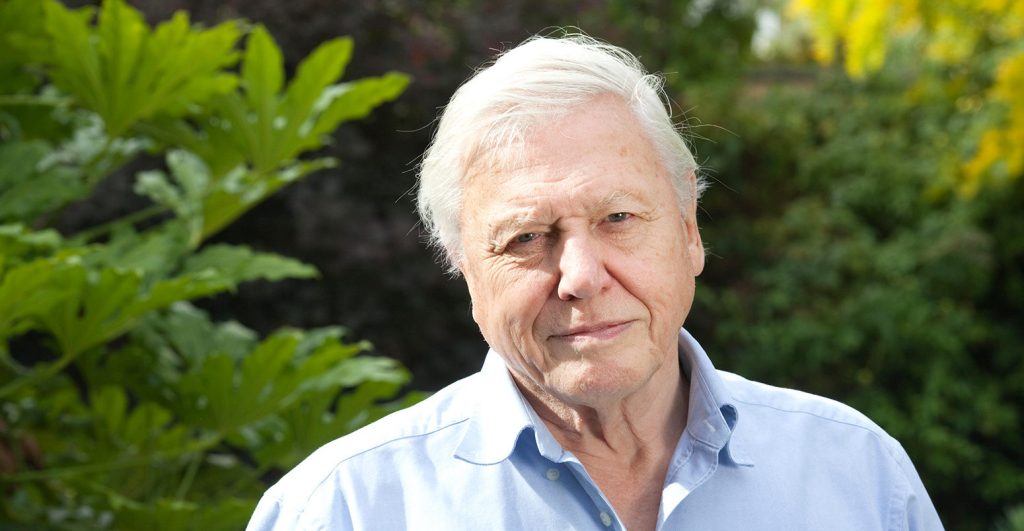
“at an unprecedented pace and scale.”
His conclusion was blunt:
“We are already in trouble.” [rev.com], [abc.net.au]
But there was another important part of his message that gets forgotten.
He didn’t say we’re doomed.
He argued that humans are extraordinary problem solvers and that, by working together, we are capable of changing direction. [rev.com], [abc.net.au]
I think that’s a far more useful message than despair.
This isn’t left versus right
A molecule of carbon dioxide doesn’t vote.
Physics isn’t Labour or Conservative.
An ocean doesn’t know whether you voted Leave or Remain.
A thermometer isn’t woke.
There is enormous room for political disagreement about what we should do about climate change.
There should be.
Different political traditions will favour different solutions.
- Markets versus regulation.
- Taxes versus incentives.
- Nuclear versus renewables.
- Individual choice versus legislation.
- Adaptation versus mitigation.
- Domestic action versus international agreements.
Those arguments aren’t inherently anti-scientific.
They’re democracy.
But we need to begin those arguments from the same physical reality.
There isn’t a Conservative atmosphere and a Labour atmosphere.
There isn’t a Leave climate and a Remain climate.
There’s just the one we’ve got.
So what on Earth does this have to do with Zero Waste Llama?
Quite a lot, actually.
But perhaps not in the way you think.
I really don’t want anyone reading Zero Waste Llama to believe that the fate of the planet rests upon whether they remembered their reusable coffee cup on Tuesday.
It doesn’t.
Climate change is a systems problem.
- Our energy systems.
- Transport.
- Buildings.
- Industry.
- Agriculture.
- Finance.
- Land use.
- Consumption.
- And waste.
That doesn’t mean individual choices are pointless either.
They can reduce waste.
Save money.
Create demand for better products.
Change social norms.
Influence businesses.
Influence other people.
And eventually influence politics.
The mistake is believing we must choose between individual change and systemic change.
We don’t.
- We can repair things and demand manufacturers make things repairable.
- We can buy less and challenge business models based on disposable consumption.
- We can reuse things and support proper producer responsibility.
- We can reduce food waste and demand a more resilient food system.
- We can reduce our personal emissions and expect industry and government to address emissions at the scale required.
It isn’t either/or.
We don’t need perfection. We need honesty.
This is really the Zero Waste Llama philosophy underneath all of this.
Nobody is perfect.
I’m certainly not.
Governments will get things wrong.
Scientists will revise estimates.
Environmental groups will occasionally exaggerate things.
Businesses will greenwash.
Politicians will cherry-pick statistics.
Journalists will sometimes give airtime to nonsense.
And all of us are capable of believing evidence that conveniently supports something we already wanted to believe.
That’s human.
But changing your position when better evidence arrives isn’t weakness.
That’s what science is supposed to do.
And it’s what the rest of us should try to do too.
The evidence that humans are warming this planet doesn’t rest on ideology.
It rests upon more than a century of physics and decades of increasingly precise observations.
NASA describes human influence on modern warming as established scientific fact. [science.nasa.gov]
More than 99% of the relevant peer-reviewed scientific literature supports human-caused climate change. [iopscience.iop.org]
The IPCC documents increasing risks with each additional increment of warming. [ipcc.ch]
And the latest measurements show exceptionally high global temperatures, record ocean heat and continuing sea-level rise. [wmo.int], [wmo.int]
So yes. Let’s argue. Let’s argue about
- carbon taxes.
- nuclear power.
- wind farms.
- electric cars.
- heat pumps.
- costs, timescales and fairness.
Let’s ask
- whether proposed environmental policies actually work.
- who profits.
- who pays.
Let’s question governments, businesses, environmental organisations and Big Oil alike. But let’s do it on the basis of evidence.
Because we genuinely have only one planet.
No spare in the cupboard.
No Planet B hiding behind the sofa.
And this particular llama would quite like us not to break the one we’ve got.
🦙🌍💚

Sources & Further Reading
A note on sources: Climate science is an enormous field, so no bibliography could reasonably contain every relevant study. The references below are the principal scientific assessments, peer-reviewed research papers, regulatory publications and authoritative sources underpinning the factual claims made in this article. Wherever possible, I have prioritised primary research and organisations including the IPCC, NASA, World Meteorological Organization, Lancet Countdown, Financial Conduct Authority and Bank of England.
Scientific consensus and the causes of climate change
NASA – Scientific Consensus
An accessible summary of the scientific evidence that human activities, particularly burning fossil fuels, are warming Earth, together with links to statements from major scientific organisations.
Read NASA’s Scientific Consensus page [science.nasa.gov]
Intergovernmental Panel on Climate Change – Sixth Assessment Report
The IPCC’s major international assessment covering the physical science of climate change, impacts and vulnerability, adaptation and mitigation.
Explore the IPCC Sixth Assessment Report [ipcc.ch]
Lynas, M., Houlton, B. Z. & Perry, S. (2021), Greater than 99% Consensus on Human Caused Climate Change in the Peer-Reviewed Scientific Literature, Environmental Research Letters, 16, 114005.
An analysis based on a database containing 88,125 climate-related scientific papers published since 2012. [iopscience.iop.org]
Current global climate observations
World Meteorological Organization – State of the Global Climate 2025
The principal source used here for the latest observations on global temperature, ocean heat, sea level, glaciers, sea ice and Earth’s energy imbalance.
Read State of the Global Climate 2025 [wmo.int], [wmo.int]
Food security
IPCC AR6 Working Group II – Chapter 5: Food, Fibre and Other Ecosystem Products
A comprehensive assessment of climate risks affecting agriculture, fisheries, livestock and food security.
Read IPCC Chapter 5 [ipcc.ch]
Health and infectious disease
Romanello, M. et al. (2025), The 2025 Report of the Lancet Countdown on Health and Climate Change, The Lancet.
Tracks climate-related health effects including extreme heat, infectious disease, food systems and socioeconomic impacts. [thelancet.com], [lancetcountdown.org]
World Meteorological Organization – State of the Global Climate 2025
Also includes evidence concerning changing climatic suitability for infectious-disease transmission, including dengue.
Read the WMO report [wmo.int]
Biodiversity and mass extinction
IPCC Working Group II – Impacts, Adaptation and Vulnerability
The principal assessment used for climate-related risks to terrestrial, freshwater and marine ecosystems.
Explore IPCC AR6 [ipcc.ch], [unfccc.int]
Márquez, J. A. et al. (2026), Differences in Physiological Tolerance to Global Warming Caused the Permian–Triassic Transition Between the Paleozoic and Modern Faunas, Proceedings of the National Academy of Sciences.
Recent research examining temperature-dependent hypoxia and extinction during the end-Permian crisis. [eprints.soton.ac.uk], [pnas.org]
Eos – How Modern Emissions Compare to Ancient, Extinction-Level Events
An accessible discussion of geological carbon releases, environmental change and mass extinction.
Read the Eos article [eos.org]
How well did old climate models perform?
Hausfather, Z., Drake, H. F., Abbott, T. & Schmidt, G. A. (2020), Evaluating the Performance of Past Climate Model Projections, Geophysical Research Letters, 47(1), e2019GL085378.
The researchers compared models published between 1970 and 2007 with subsequent observed temperatures and found that they were generally skilful at projecting warming.
Read the NASA GISS publication summary [giss.nasa.gov]
Sea level, insurance and financial risk
World Meteorological Organization – State of the Global Climate 2025
Provides observational data concerning global sea-level change and its accelerating rate.
Read the WMO report [wmo.int], [wmo.int]
Financial Conduct Authority – FCA Adaptation Report 2025
Examines climate adaptation within UK financial services, including insurance, lending and investment implications.
Read the FCA Adaptation Report 2025 [fca.org.uk]
Bank of England / Prudential Regulation Authority – Enhancing Banks’ and Insurers’ Approaches to Managing Climate-Related Risks (2025).
Sets expectations for how UK-regulated banks and insurers should identify and manage climate-related financial risks.
Read the Bank of England policy statement [bankofengland.co.uk]
Fossil-fuel industry knowledge and climate misinformation
Supran, G., Rahmstorf, S. & Oreskes, N. (2023), research published in Science examining Exxon’s historic global-warming projections.
The research found that Exxon’s internal scientists produced skilful projections of subsequent global warming decades ago. [popsci.com], [theguardian.com]
University of Cambridge – News Article or Big Oil Ad? (2025).
Research concerning fossil-fuel native advertising and its potential impact on perceptions of climate action.
Read the University of Cambridge research [cam.ac.uk]
Nicolosi, E., Medina, R., Brewer, S., Vorkink, M. & Allred, A. (2025), The New Denial: Climate Solution Misinformation on Social Media, Global Sustainability.
Research analysing more than 200,000 social-media posts and documenting a shift towards misinformation attacking climate solutions and their supporters.
Read The New Denial [cambridge.org], [cambridge.org]
Nature – Do Fossil Fuel Firms Reframe Online Climate and Sustainability Communication?
Research examining the way fossil-fuel companies frame climate and sustainability messaging online.
Read the Nature paper [nature.com]
Watch
If you learn better from watching than reading scientific papers, these are useful companions to the sources above.
Big Oil vs The World / The Power of Big Oil
The BBC documentary Big Oil vs The World, retitled The Power of Big Oil in the United States, looks at the history of fossil-fuel industry knowledge, political influence and the public debate surrounding climate change.
Watch Big Oil vs The World / The Power of Big Oil
Climate misinformation explainer
A shorter introduction to the subject of climate misinformation.
Climate change and the geological record
For more context around climate change in Earth’s geological past and why the rate of modern change matters:
Watch the geological-climate explainer
One final thought
You don’t have to take my word for any of this.
Actually, please don’t.
- Follow the links.
- Read what the scientists themselves say.
- Look at NASA.
- Look at the IPCC.
- Look at the measurements gathered by the World Meteorological Organization.
- Read the research papers.
- Question them.
- Check the methodology.
Then apply exactly the same level of scrutiny to the YouTube video, politician, newspaper columnist, energy-company advert or social-media account telling you that thousands of scientists around the world somehow got all of this wrong.
Healthy scepticism isn’t choosing the answer we prefer.
It’s being prepared to follow the evidence regardless of whether we like where it leads.
We don’t need everyone to agree about the solution.
We do need to be honest about the problem.
🦙🌍💚
Zero Waste Llama
Practical sustainability without the perfection.
Because doing something is better than doing nothing, and several billion imperfect humans making better choices can achieve rather more than a handful of perfect ones.
Frequently Asked Questions About Climate Change
Is climate change caused by humans?
Yes. Multiple independent lines of evidence show that the current global warming trend is primarily caused by human activities, especially greenhouse gases released by burning fossil fuels. Major scientific organisations worldwide support this conclusion.
Hasn’t Earth’s climate always changed naturally?
Yes. Earth’s climate has changed naturally throughout its history. However, scientists can distinguish between natural climate influences and the effects of human greenhouse-gas emissions. Natural factors alone cannot explain the sustained global warming observed during the industrial era.
Is there really a scientific consensus on climate change?
Yes. A major review of 88,125 climate-related scientific papers estimated that greater than 99% of the peer-reviewed literature supports the conclusion that modern climate change is human-caused.
Are climate models accurate?
Climate models have uncertainties, but assessments of historical models have found that many successfully projected subsequent global-temperature change, particularly when differences between projected and actual greenhouse-gas emissions are taken into account.
What is climate misinformation?
Climate misinformation is false or inaccurate information about climate change or climate action, whether or not the person sharing it intends to mislead. Deliberately fabricated or deceptive information is generally described as climate disinformation. UNDP identifies climate denial, climate delay, greenwashing and conspiracy narratives among the forms these can take. [climatepro…e.undp.org]
What’s the difference between climate denial and climate delay?
Climate denial rejects or seriously questions the reality, human cause or seriousness of climate change. Climate delay generally accepts that climate change exists but uses arguments that discourage, postpone or obstruct measures intended to address it. Recent assessments note that misinformation has increasingly shifted towards disputing climate solutions rather than simply denying the underlying science. [gov.uk], [akademie.dw.com]
Can I accept climate science but disagree with net-zero policies?
Absolutely. Accepting the scientific evidence for human-caused climate change doesn’t require supporting every climate policy. Questions about cost, fairness, technology, taxation and the appropriate balance between mitigation and adaptation are legitimate political and economic debates.


