The long summer holidays seem to disappear in the blink of an eye. One minute you’re enjoying lazy mornings and picnics in the park, and the next you’re facing the annual back‑to‑school shopping list. This year, many families are looking for Eco‑Friendly Back‑to‑School Prep ideas to make the transition more sustainable.
For many families, the start of a new school year can generate a surprising amount of waste. New uniforms, stationery, lunch supplies, backpacks, water bottles, and gadgets often replace perfectly usable items simply because it’s become part of the routine.
The good news? Preparing for school doesn’t have to mean filling the recycling bin, spending a fortune, or buying everything brand new.
Here are some practical ways to make back‑to‑school season a little kinder to both the planet and your budget.
Estimated reading time: 6 minutes
Start with What You Already Have
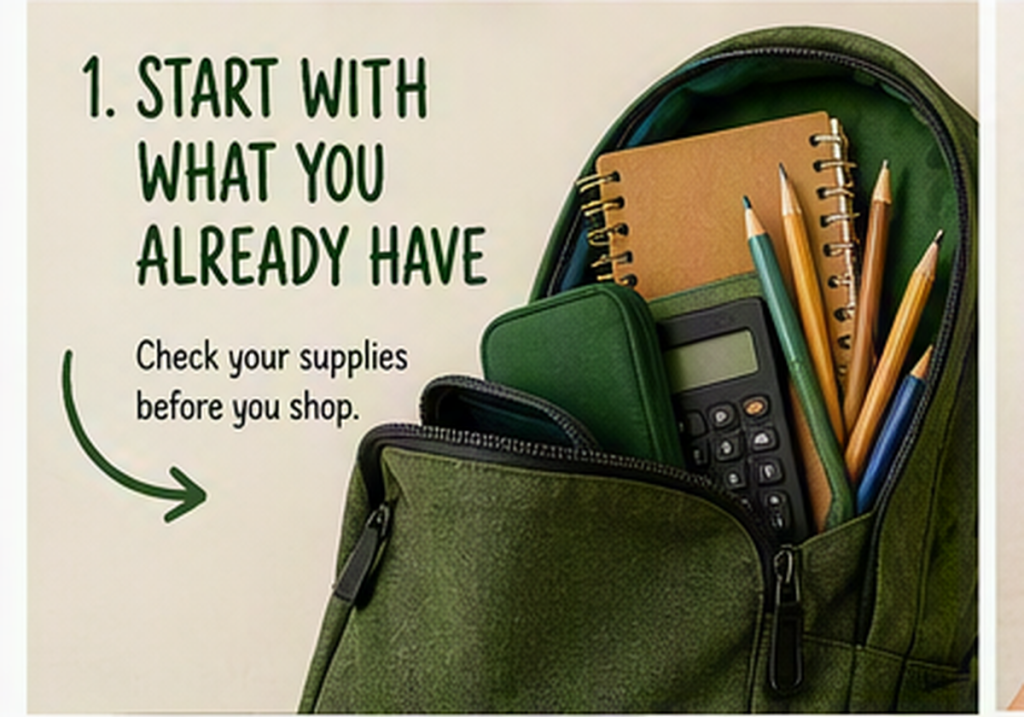
Before heading to the shops, gather all existing school supplies in one place.
You might discover:
- Half‑used notebooks
- Pens and pencils hidden in drawers
- Rulers, calculators, and geometry sets
- Lunch boxes in perfectly good condition
- Backpacks that only need minor repairs
Children often outgrow items or forget what they already own. A simple inventory can prevent unnecessary purchases and reduce clutter at the same time.
Repair Before Replacing

A broken zip or torn seam doesn’t always mean a backpack has reached the end of its life.
Simple repairs can often extend the lifespan of:
- School bags
- Pencil cases
- Lunch bags
- Uniforms
- PE kits
Visible mending can be particularly effective for children’s clothing. Colourful patches can transform a worn garment into something unique while teaching valuable lessons about repairing rather than replacing.
Choose Second‑Hand Uniforms

School uniforms are often among the biggest back‑to‑school expenses.
Many schools now run:
- Uniform swap events
- Community donation programmes
- Pre‑loved uniform sales
Children can quickly outgrow clothing while leaving it in excellent condition. Buying second‑hand keeps usable textiles in circulation and saves money for everyone involved.
If your school doesn’t currently offer a uniform exchange, consider suggesting one. It can become a fantastic resource for families.
Buy Better, Not More

When replacements are genuinely needed, focus on quality rather than quantity.
For example:
✅ Refillable pens
✅ Durable stainless steel water bottles
✅ Long‑lasting backpacks
✅ Reusable food containers
✅ Pencil cases made from recycled materials
Often the most sustainable option is the one that lasts for years.
Rethink School Lunches

Single‑use packaging can quickly accumulate throughout the school year.
Consider:
- Reusable lunch boxes
- Refillable water bottles
- Cloth napkins
- Reusable sandwich wraps
- Homemade snacks stored in reusable containers
Small changes made every day can significantly reduce waste over a full academic year.
As a bonus, homemade lunches are frequently more affordable than individually packaged alternatives.
Avoid the Trend Trap
Character‑themed stationery and accessories can be tempting, especially when shops are filled with colourful displays.
Before buying, ask:
- Will it still be useful in six months?
- Is it replacing something that already works?
- Does it serve a practical purpose?
Choosing timeless designs often means supplies remain usable for longer and are less likely to be discarded when preferences change.
Label Everything

One of the simplest waste‑prevention strategies is also one of the easiest.
Clearly labelling belongings helps items find their way back home instead of ending up in lost property or landfill.
Consider adding names to:
- Water bottles
- Lunch boxes
- Coats
- Jumpers
- Pencil cases
- Sports equipment
Keeping track of belongings means fewer replacements throughout the year.
Progress, Not Perfection

Don’t worry if you’re not ready for a completely zero‑waste school year.
Every reused notebook, repaired jumper, and second‑hand uniform is a positive step.
Sustainability isn’t about achieving perfection. It’s about making practical choices that work for your family, your budget, and your circumstances.
This autumn, challenge yourself to buy a little less, reuse a little more, and see how much of your back‑to‑school preparation can be completed using what you already have.
The planet and your wallet will thank you.
Get Children Involved

Back‑to‑school preparation is a perfect opportunity to talk about sustainability.
Children can:
- Organise supplies
- Help repair clothing
- Decorate second‑hand items
- Pack waste‑free lunches
- Learn how everyday choices affect the environment
When sustainability becomes part of daily life rather than a special project, it often sticks.
Your Turn
Do you have any favourite tips for reducing waste during back‑to‑school season?
Key Takeaways
- Start your Eco‑Friendly Back‑to‑School Prep by checking what supplies you already have to avoid unnecessary purchases.
- Repair items before replacing them; even small fixes can extend the life of backpacks and uniforms.
- Opt for second-hand uniforms through swaps or community programs to save money and keep textiles in use.
- Choose durable, reusable items over single-use products to reduce waste and save money over time.
- Involve children in sustainable practices to teach them the importance of eco-conscious choices as part of their routine.