
For years now I’ve had a sewing room. I’ve made my own curtains, clothes, bags — you name it. These days, though, it’s mostly used for repairing clothing, and I also love to repair and up‑cycle items whenever possible, rather than making new items from scratch.
And honestly? That feels like progress. Choosing to up-cycle and repair fits my values well.
Fast fashion has made it far too easy to throw things away at the first sign of wear. But in my experience, around 50% of clothing is absolutely repairable with a little time, basic skills, and a willingness to try. When something can’t be repaired, it’s put to one side for up‑cycling instead of going straight to landfill. Repair and up‑cycle should always be considered before throwing things away.
Estimated reading time: 4 minutes
Why Repair Comes First
Repairing what we already own:
- Reduces textile waste
- Saves money
- Extends the life of well‑loved items
- Builds practical, empowering skills
A loose seam, worn cuff, broken zip or small hole doesn’t mean an item has reached the end of its life. Often, the best approach is to repair and then up‑cycle if repairing truly isn’t an option.
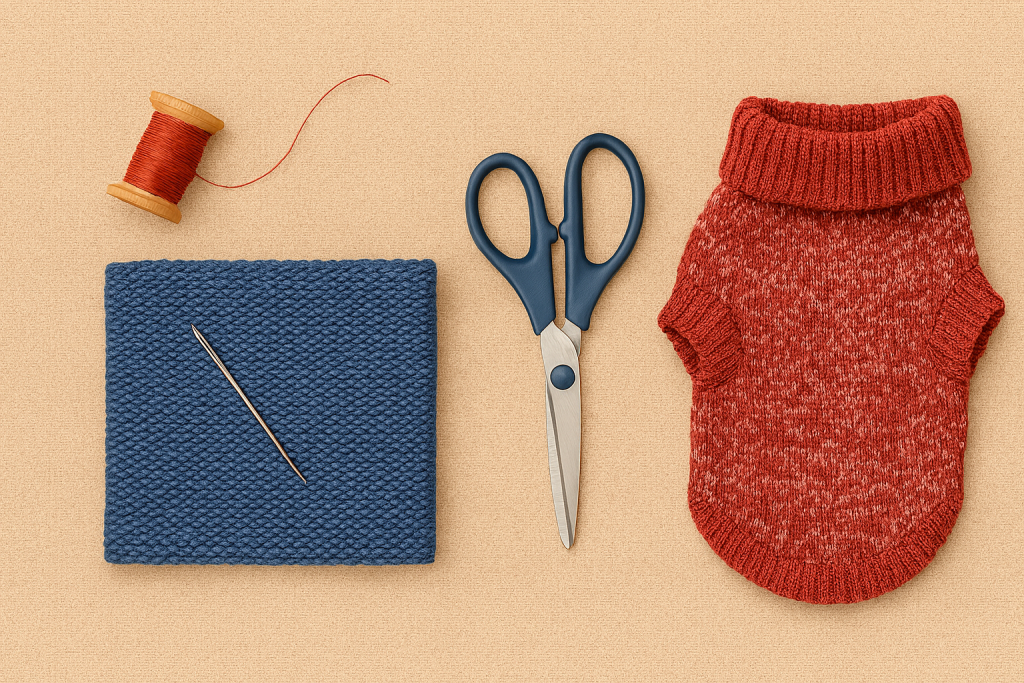
Favourite Jumper → Dog Coat
One of my favourite up‑cycles came from a jumper I absolutely loved — even though it was over ten years old. Sadly, it started shrinking beyond wearable repair. I was genuinely devastated… but that wasn’t the end of the story. In fact, this experience is a great example of how to repair and up‑cycle a beloved item creatively.
Instead of binning it, I turned it into a dog coat for Poppy. She now sports a rather stylish new (FatFace!) look.
Admittedly, she wasn’t keen on posing for photos that day — but the jumper lives on, warm and useful, rather than wasted.
Washing‑Up Scrubby: A Simple Swap
Another ongoing experiment has been replacing conventional washing‑up sponges. It’s one more way to repair something small and up‑cycle odds and ends around the house.

My first prototype uses:
- Jute hessian on the bottom for gentle scrubbing
- Towelling in the middle for absorption
- Cotton fabric on the top for durability
This was made from old towels and worn summer trousers — materials that might otherwise have been thrown away. And the result? It works a treat, is washable, and doesn’t shed microplastics down the drain. With a bit of creativity, it’s easy to repair and also up‑cycle everyday items into something practical.
Small Skills, Big Impact
Repairing and up‑cycling doesn’t have to be perfect or Pinterest‑worthy. It’s about:
- Doing what you can
- Learning as you go
- Keeping materials in use for as long as possible
Every repaired seam and repurposed fabric is a quiet act of resistance against throwaway culture. Try to repair garments and up‑cycle textiles whenever you can.
If you’re new to sewing, start small. Even basic hand stitching can make a real difference — and the planet will thank you for it! Making the decision to repair what you have and up‑cycle what you can’t truly is a positive step forward.
Key Takeaways
- Repairing clothing reduces waste, saves money, and extends the life of items.
- About 50% of clothing is repairable, encouraging up-cycling instead of landfill disposal.
- Transforming beloved items, like turning a jumper into a dog coat, showcases creative up-cycling.
- Creating practical items, such as washable scrubbers, from old materials demonstrates resourcefulness.
- Repair and up-cycle promote skills that resist throwaway culture and benefit the planet.






Pingback: Eco‑Friendly Back‑to‑School Prep Tips and Ideas - Zero Waste Llama
Pingback: Upcycle Old Clothes into Bags for Eco Fashion - Zero Waste Llama