LEDs – The Future is Bright!

This is not something new, for me, but given the energy and cost savings, I thought I would post about this. Lightbulbs: The Future Is LED is a topic that is getting more attention as people focus on efficiency and sustainability. Furthermore, more experts agree that Lightbulbs: The Future Is LED is a key area for future home upgrades.

LEDs are the most efficient type of bulb. They have great claimed longevity, give instant light, and work in low temperatures. Therefore, they are “The future of home lighting”, and many consumers now believe that Lightbulbs: The Future Is LED is more than just a marketing phrase.

  • They use very little energy
  • Last longer than other bulbs
  • Provide instant light – no “warming up” time

Estimated reading time: 2 minutes

(more…)

1 Comment

The Milk Dilemma

After an extensive amount of research, and much frustration I have come to the conclusion that I (personally) have very little choice but to continue to buy the 4 pints / 2.272 litre plastic bottles of milk from the supermarket. This is all part of the milk dilemma many of us face when shopping for milk. In short, the milk dilemma truly affects a lot of people, not just me.

Choosing milk isn’t as straightforward as it seems. In fact, the milk dilemma complicates matters for those trying to choose the most sustainable option. This article explores the environmental impact of dairy milk versus plant‑based alternatives, helping readers understand the sustainability, ethical considerations, and climate implications behind one of our everyday food choices.

Estimated reading time: 4 minutes

(more…)

1 Comment
Jungle Culture - Straws in a pile

🌱 #PlantBamboo for Straws: A Simple Action With a Big Impact

Plastic straws might seem small, but their environmental impact is anything but. Billions are used globally each year, often for just minutes, before ending up in landfill, incineration, rivers, or the ocean. While reusable alternatives like metal, glass, and silicone straws are growing in popularity, bamboo straws stand out as one of the most genuinely sustainable options. One brilliant idea is to plant bamboo for straws, supporting an eco-friendly cycle from the source to the finished product.

Bamboo is fast‑growing, renewable, and naturally biodegradable. It requires no pesticides, very little water, and absorbs more carbon dioxide than many trees. When responsibly grown, bamboo can be harvested without killing the plant — making it an ideal material for zero‑waste products.

(more…)

6 Comments
Wind farm at sunset
Photo by Rawfilm on unsplash

My carbon footprint & why I can’t do nearly enough

The truth of it is that, for Joe Bloggs and I, aiming for zero waste is truly difficult – alone the fact that I have not managed to source all the items I need for MY everyday life without plastic is both frustrating and deeply saddening. The question of carbon footprint personal responsibility is something I think about a lot.

Some issues arise due to my disability / health and others due to low/reduced income (2020 was difficult for most businesses thanks to COVID-19), and yet more because I ordered something which is eco / zero waste / compositable etc., but it turns out it has travelled the world in order to arrive at my doorstep.

I am also not in a position to change some things at this time, e.g. gas usage due to cost and feasibility. Even without a car, without taking a bus, without buying products wrapped in plastic, I managed to STILL leave a significant footprint on this planet.

Estimated reading time: 7 minutes

(more…)

2 Comments
Sunrise at Quiraing, Isle of Skye, Scotland

Travel & Tourism: Post-Brexit, Post-COVID and Pro-Sustainability

If you’re looking to fly less and do your bit with learning how to be eco-friendly, why not test the waters closer to home? It’s also worth considering how the landscape of travel and tourism after Brexit and COVID has influenced our holiday choices. Despite the fact that the UK is home to a surprisingly diverse range of landscapes, its natural beauty has traditionally been overlooked in favour of holidays abroad – especially in warmer climates. In fact, travel and tourism after Brexit and COVID has led many to re-evaluate where they spend their holidays.

With a plethora of environmentally friendly attractions, sustainable places to stay and zero-waste restaurants on our doorstep, the UK has everything you need for a wonderful getaway, with much reduced carbon footprint. Moreover, tourism and travel across Britain post-Brexit and post-COVID has encouraged people to seek out these alternatives.

Estimated reading time: 3 minutes

(more…)

0 Comments

Loose Tea vs Teabags

If you’re trying to reduce waste at home, your daily cup of tea is a surprisingly powerful place to start. In this post, we look at loose leaf tea vs teabags — from flavour and freshness to hidden plastics, cost, and environmental impact. This will help you decide which is the better zero-waste choice.

I never gave tea-types much thought, until I lived in Hamburg, Germany (2000-2007). Tea was something that automatically came in teabags – I popped it in a teapot or cup, added hot water and let it brew. For me, varieties of tea (up to the year 2000) consisted of Tetleys, PG Tips and herbal (mostly chamomile). These ALWAYS came in a bag!

When I moved to Germany, a whole new world opened: Tea shops are common in towns and cities. In fact, Hamburg, being the largest port in Germany, had more than its fair share. A quick search on google showed me well over 100! There were more tea varieties than I had ever seen before in my life! And very few in bags! Rows and rows of large jars adorn these shops. You can ask about the origin or flavours of any of them – and/or have a sniff! Every time I return, I come back with kilos of it! From whole leaf Lemon Verbena, to mixes of loose teas with roses…. It is part of my life and routine now. Although I admit, I am more of a coffee drinker!

Estimated reading time: 7 minutes

(more…)

2 Comments

Smart Meter

Smart meter benefits include helping you make better sense of the energy you use. As a result, you are in a stronger position to both lower your bills and reduce your environmental impact. EDF finally fitted one for me today – after a very long wait! An engineer came out last year but was unable to install it due to the layout of my mains electricity box. This meant I had to first get an electrician in to rearrange everything. After that, I had to go back onto the waiting list… but persistence paid off, and it’s now installed. Estimated reading time: 3 minutes One major benefit of smart meters is the convenience. Automatic readings mean no more waiting at home for someone to manually read your gas or electricity meter. Given that my gas meter lives in the far corner of a cupboard packed with baking bowls and equipment, this is a huge relief! Smart meters use two-way communication between your home and the energy supplier. Therefore, regular home visits for readings are no longer required. There’s ongoing debate about whether smart meters actually reduce energy consumption. Some research suggests that savings aren’t guaranteed – and I agree that results depend heavily on the individual. For me, the key value lies in visibility. By occasionally checking the in-home display throughout the day or week, you can quickly spot when usage spikes. This naturally leads you to question what’s switched on. It also makes you wonder what might be running…

0 Comments

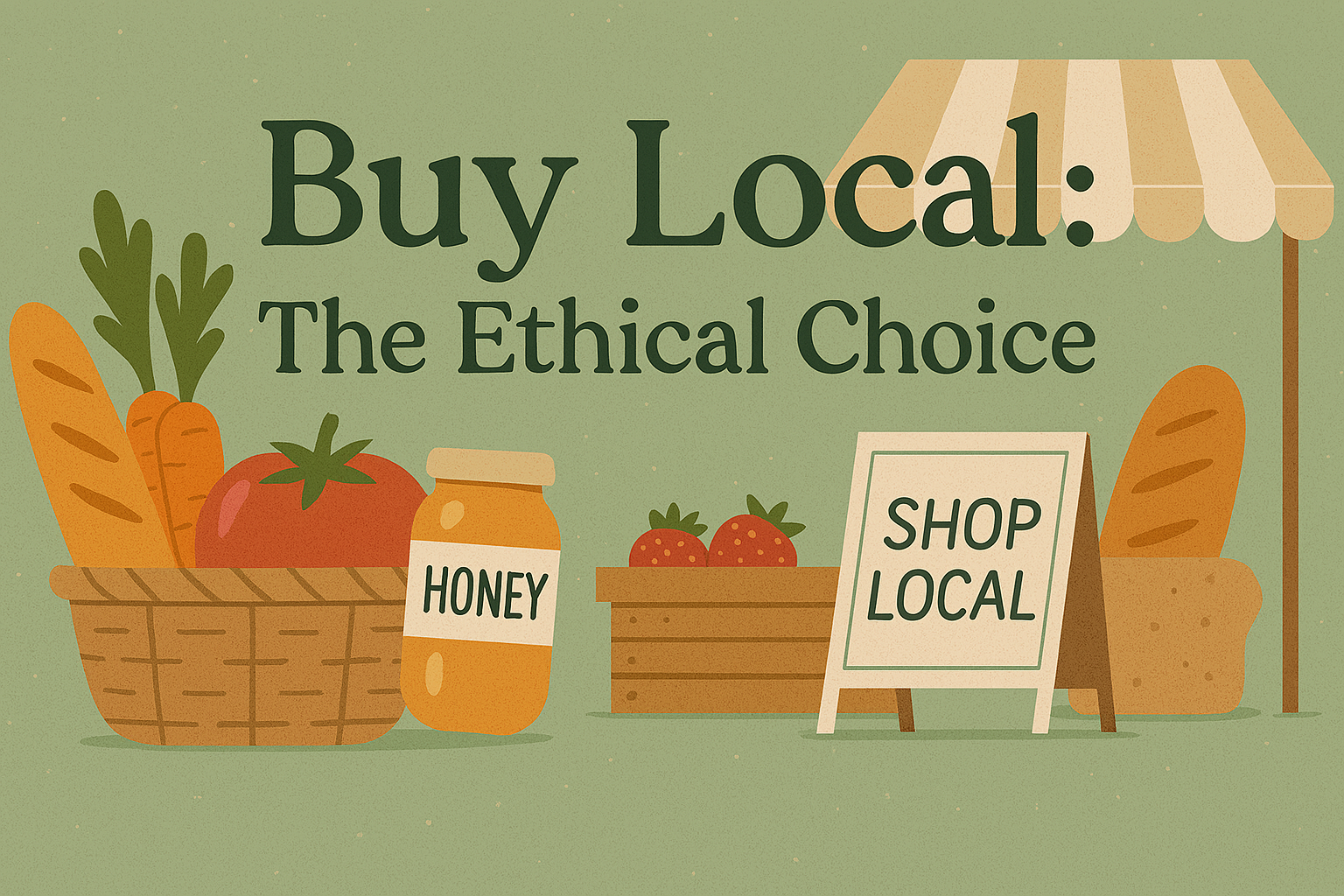
Buy Local: The Ethical Choice

Buying local is one of the easiest ways to make a positive difference — and it doesn’t require a total lifestyle overhaul.

Think about it: when we buy out-of-season food like strawberries in December, that produce hasn’t magically appeared on the shelf. It’s usually been flown thousands of miles, kept cold for long periods, and wrapped in layers of plastic just to survive the journey. The same goes for many everyday products that are imported cheaply but come with a heavy environmental cost.

Estimated reading time: 3 minutes

(more…)

3 Comments