Why £4 Dresses Don’t Belong in a Zero‑Waste Future
Ultra‑fast fashion is a key reason these ultra-cheap clothes undermine sustainability efforts.
Introduction: When Cheap Isn’t Cheerful (or Logical)
Your phone buzzes.
Flash sale. 80% off.
A £4 dress.
A £6 hoodie.
Earrings for 99p.
In a cost‑of‑living crisis, platforms like Shein and Temu don’t just feel tempting — they feel reasonable. When money is tight, affordability matters. Zero Waste Llama is not here to shame anyone for needing clothes.
But zero waste isn’t just about what fits in your bin.
It’s about where waste begins — and ultra‑fast fashion begins with waste designed into the system.
This isn’t a story about individual bad choices. It’s about structural damage: environmental breakdown, labour exploitation, and supply chains engineered to move fast, stay opaque, and dodge accountability.
Because a £4 dress isn’t cheap.
It’s just very good at hiding the bill.
Zero waste isn’t about perfection — it’s about refusing systems built on disposability.
What Is Ultra‑Fast Fashion?
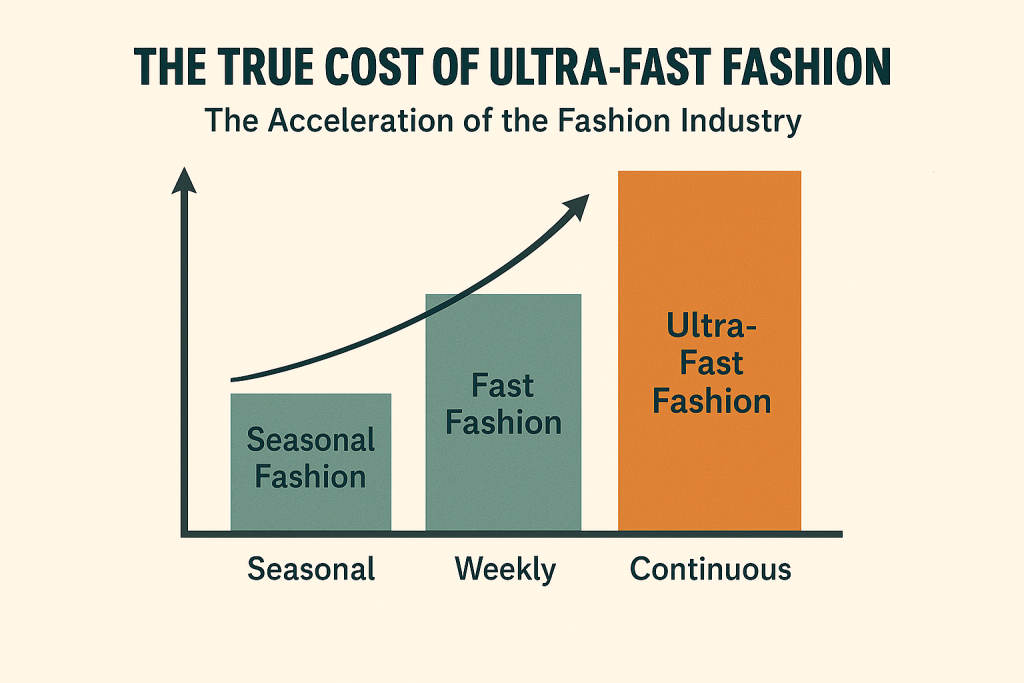
Fast fashion was already running on overdrive. Ultra‑fast fashion floors the accelerator and disables the brakes.
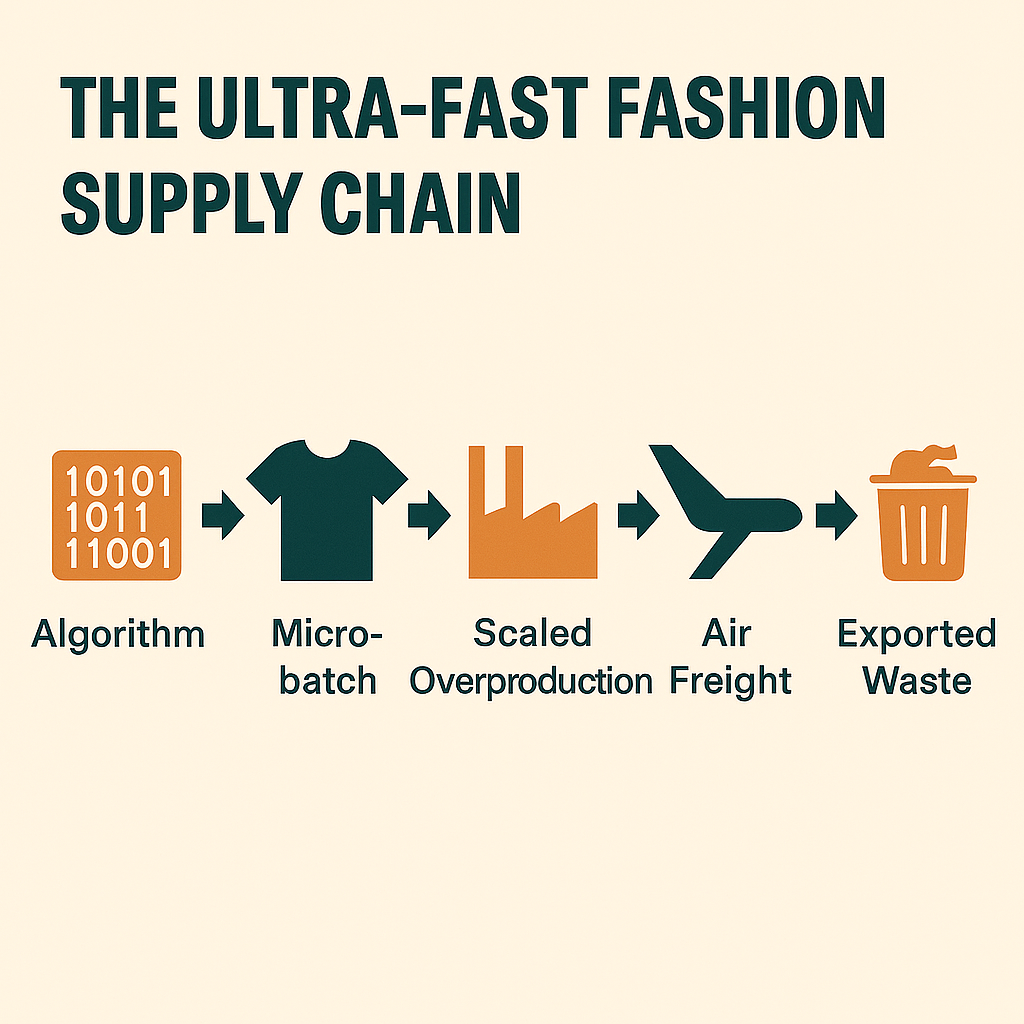
Shein reportedly adds 6,000+ new items per day, using AI trend analysis and ultra‑small test batches that can be scaled almost instantly. Temu, owned by PDD Holdings, sells across hundreds of categories using constant discounts, gamified shopping, and direct‑to‑consumer shipping.
This isn’t demand‑led fashion.
It’s algorithm‑led overproduction.
The goal isn’t to meet needs. It’s to flood the feed.
Environmental Impact: Waste, Pre‑Installed
1. Carbon Emissions That Cancel Out “Green” Claims
Shein’s own climate disclosures show its greenhouse gas emissions nearly doubled between 2022 and 2023, making it the largest emitter in the fast‑fashion sector.
Why?
- Heavy reliance on polyester (a fossil‑fuel plastic)
- Energy‑intensive manufacturing
- Millions of small‑parcel air‑freight shipments
Polyester deserves a special side‑eye:
- Made from oil
- Sheds microplastics every time it’s washed
- Is rarely recycled into new clothes
From a zero‑waste perspective, this isn’t just inefficiency.
It’s planned pollution.
2. Clothing Waste Isn’t Reduced — It’s Exported
Ultra‑cheap garments are worn briefly — if at all.
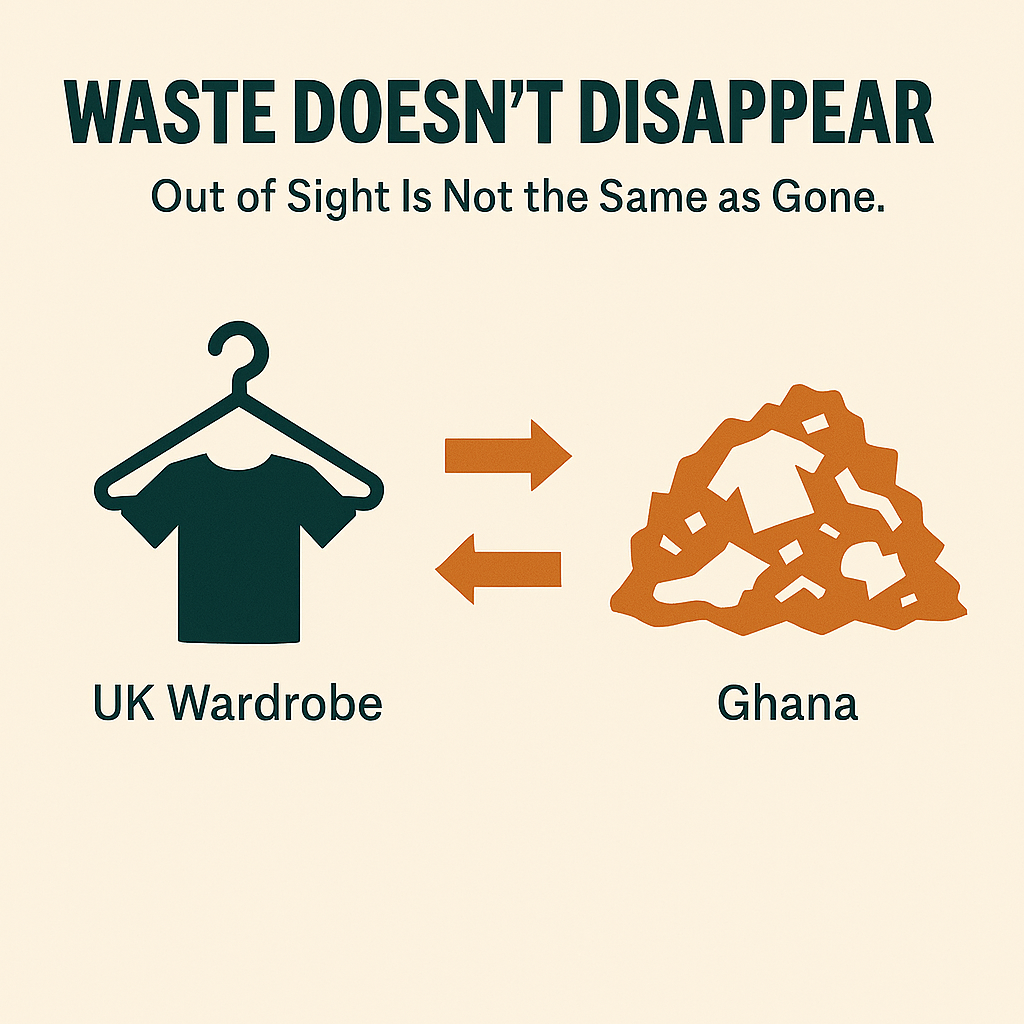
In the UK, clothes are worn an average of 7–8 times before disposal. The waste doesn’t disappear; it gets shipped elsewhere.
- Ghana’s Kantamanto Market receives ~15 million garments per week
- A significant percentage is unsellable and dumped immediately
These synthetic garments don’t biodegrade. They fragment, shed microplastics, and contaminate water systems.
Out of sight is not the same as gone.
3. Overproduction Is the Point
Ultra‑fast fashion doesn’t respond to trends — it manufactures them, then overwhelms consumers with volume.
Thousands of daily listings normalise:
- Impulse buying
- Ultra‑short wear cycles
- Disposability as default
From a zero‑waste lens, this is waste generated before a garment is ever worn.
Labour: The Human Cost Built Into the Supply Chain
Waste doesn’t stop at materials.
Investigations into Shein’s supply chain found workers clocking up to 75 hours per week, often with just one day off per month.
At Temu’s parent company, PDD Holdings, reports have documented working months exceeding 380 hours.
Then there’s forced‑labour risk.
A 2023 U.S. Congressional report flagged potential exposure to Uyghur forced labour, linked to Xinjiang — a region where independent auditing is severely restricted.
Despite public assurances, verifiable end‑to‑end transparency is still missing.
There is no such thing as ethical waste — because waste always lands somewhere.
The Transparency Problem
Zero waste requires visibility. Ultra‑fast fashion relies on the opposite.
- Temu provides almost no public sourcing data
- Ethical fashion platform Good On You rates Temu “We Avoid”
- Shein publishes sustainability reports — critics note major verification gaps
Thousands of subcontractors + minimal disclosure = accountability evaporates.
Opacity isn’t a bug.
It’s a feature.
Regulatory Loopholes: When Policy Can’t Keep Up
Enter the de minimis rule.
- UK imports under £135
- US imports historically under $800
By shipping millions of individual parcels, ultra‑fast fashion platforms can:
- Reduce inspections
- Avoid tariffs
- Skirt labour and safety enforcement
Governments are reviewing the rule. Enforcement, however, moves at a speed that would make Shein… unimpressed.
(Graphic idea: how single‑item parcels bypass regulation)
Why This Stuff Feels Addictive
That “just one more item” feeling? That’s not accidental.
Ultra‑fast fashion platforms use:
- Countdown timers
- Spin‑to‑win mechanics
- Influencer haul culture
- “So cheap it doesn’t matter” pricing
It’s behavioural design aimed at short‑circuiting reflection.
From a zero‑waste lens, this is engineered disposability.
The Real Cost of a £4 Top
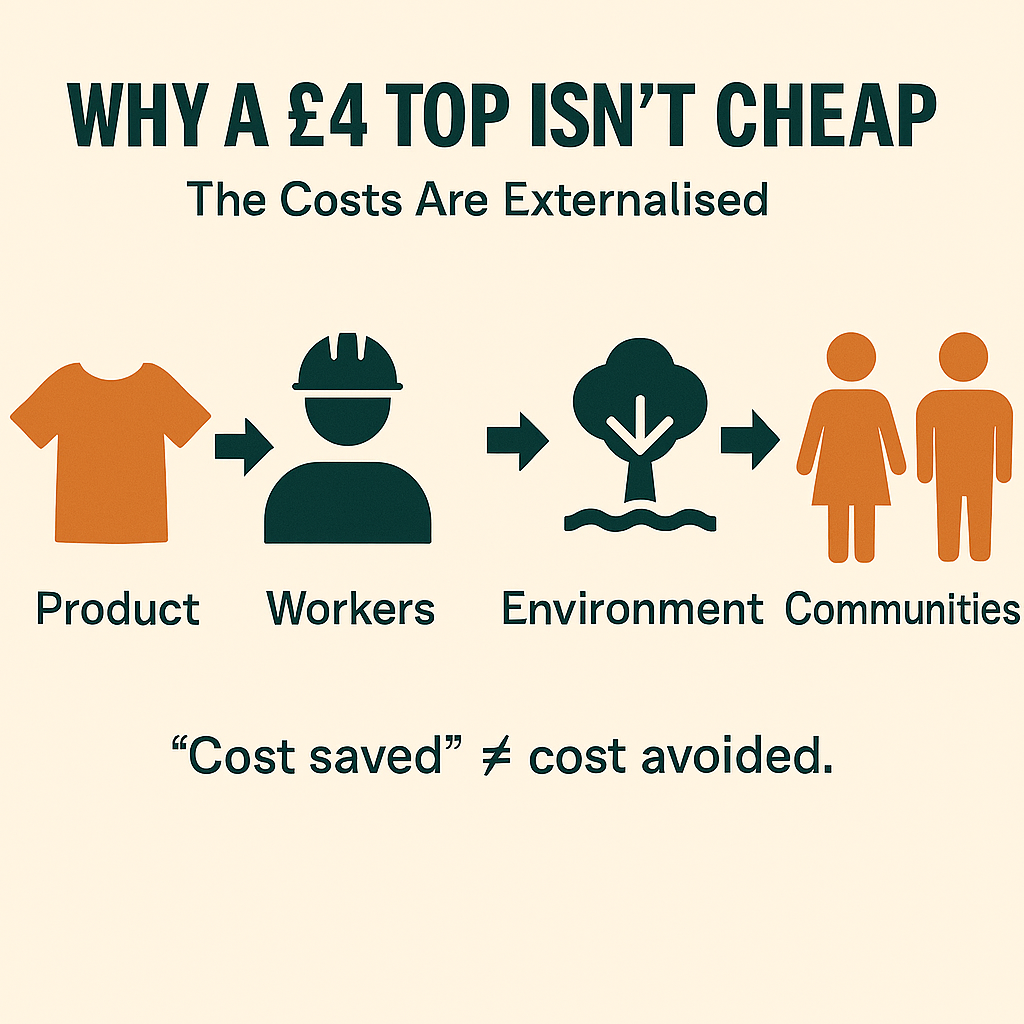
The maths only works because the damage is externalised.
- Workers absorb unsafe conditions and poverty wages
- Communities absorb polluted water and toxic waste
- Ecosystems absorb plastic and carbon
- Future generations absorb climate instability
The £4 top is cheap because the costs are paid elsewhere.
A Zero‑Waste Conclusion: This System Is Not Fixable at the Edges
Zero waste isn’t about never buying clothes.
It’s about refusing systems built on:
- Overproduction
- Exploitation
- Regulatory evasion
- Disposable design
Ultra‑fast fashion depends on endless growth in a finite world.
That alone should tell us everything.
Awareness won’t fix it overnight — but awareness builds pressure for:
- Enforceable supply‑chain transparency
- Labour protections
- Limits on overproduction
- Environmental accountability
So the next time a £4 dress pops up on your screen, remember:
If it looks cheap,
it’s because someone else paid the price.
🦙🌍
References
- Business of Fashion. (2023). Inside Shein’s real‑time retail model.
- Changing Markets Foundation. (2023). Synthetics Anonymous: Fashion’s fossil fuel addiction.
- OR Foundation. (2022). Dead White Man’s Clothes.
- Public Eye. (2024). Overworked and underpaid: Labour conditions in Shein’s supply chain.
- Reuters. (2023). China e‑commerce giant PDD faces backlash over extreme work culture.
- U.S. House Select Committee on the CCP. (2023). Fast fashion and the Uyghur Forced Labour Prevention Act.
- WRAP. (2022). Valuing Our Clothes.
- Yale Climate Connections. (2024). Shein is officially the biggest polluter in fast fashion.