Jungle Culture Bamboo Cutlery

#PlantBamboo for Cutlery

Why Bamboo Cutlery Matters

Single‑use plastic cutlery is one of the most common forms of plastic pollution found in household waste, takeaway packaging, and litter clean‑ups. Designed to be used for just a few minutes, plastic forks, knives, and spoons can persist in the environment for hundreds of years. Then, they break down into microplastics that contaminate soil, waterways, and food chains.

Bamboo offers a compelling alternative. As one of the fastest‑growing plants on Earth, bamboo can be harvested without killing the plant. This makes it a highly renewable material. Some species are capable of growing over a metre per day. As a result, bamboo forests regenerate quickly while absorbing carbon dioxide and producing oxygen at higher rates than many trees.

When used for cutlery, bamboo is lightweight, durable, and naturally antibacterial. Unlike plastic, it is made from a natural material that can safely return to the earth at the end of its life when untreated. Choosing bamboo cutlery is not just a swap — it is a small but meaningful step in supporting regenerative materials. It also reduces reliance on fossil fuels and moves us away from a throwaway culture.

(more…)

6 Comments
Photo by Micheile Henderson on Unsplash fabric

#PlantBamboo for Fabrics, Yarn & Fashion

“35% of all micro plastics in the world’s oceans are from synthetic textiles”

International Union for Conservation of Nature

There are over 1600 known species of Bamboo across many parts of the tropics and subtropics, with thousands of uses – including for the production of fabrics and yarn for the fashion industry.

Why Bamboo Is Being Promoted in Fashion & Textiles

Bamboo has become a popular material in the sustainable fashion conversation because it grows extremely quickly, requires no replanting after harvest, and can thrive without large amounts of pesticides or fertiliser. As a plant, bamboo has a relatively low land footprint and can absorb significant amounts of carbon dioxide during growth.

This has led to bamboo being marketed as a climate‑friendly alternative to conventional cotton and petroleum‑based synthetic fibres.

However, the environmental impact of bamboo fabrics depends less on the plant itself and more on how it is processed.

Estimated reading time: 4 minutes

(more…)

8 Comments
Bamboo - a beautiful green feeling by Clement Souchet on Unsplash

World Bamboo Day 18th September

World Bamboo Day, celebrated annually on 18th September, is dedicated to raising awareness of bamboo and its importance in promoting sustainability, biodiversity, and climate‑positive lifestyles.

Bamboo is often described as one of the most sustainable materials on the planet – and for good reason. It is technically a grass, not a tree, and can grow incredibly quickly without the need for pesticides or fertilisers. Furthermore, in some species, bamboo can grow up to one metre per day, making it a renewable resource with huge potential to reduce our reliance on less sustainable materials.

From a zero‑waste perspective, bamboo really stands out. It is biodegradable, versatile, and naturally strong, which means it can be used to replace plastics and other high‑impact materials in many everyday products. From bamboo toothbrushes and reusable kitchenware to textiles and flooring, bamboo alternatives are becoming increasingly accessible.

Estimated reading time: 3 minutes

(more…)

8 Comments

Product Review: Dingbats* Notebook

I had never heard of Dingbats* until Christmas Day 2020 when my best friend (sharing my love of notebooks/bullet journals, and knowing that I was working towards a Zero Waste Life – and blogging in the process), gave me a Dingbats* notebook as a gift.  

In the pocket, at the back of the notebook, was a small leaflet, which briefly detailed their product ranges and highlighted key features (discussed below). I tried them, following the link on the leaflet to find out more, then my love affair with Dingbats* began… in fact, 3 months later I ordered a further 5 journals, as well as some lovely dual-tipped pens!! 

Why? What makes Dingbats* different/better than the Moleskine notebooks, which I have used for decades?

If you’re trying to live more sustainably but refuse to give up beautiful stationery, Dingbats* notebooks might just be your perfect middle ground.

What truly sets Dingbats* apart is sustainability.
It isn’t an afterthought.
It’s built into every part of the product lifecycle.

In this Dingbats notebooks review, I share my long‑term experience using their journals as part of a zero waste lifestyle.

Read on & add the Zero Waste Llama discount code – LLAMA10 – for a 10% discount on your first order!

Estimated reading time: 12 minutes

(more…)

0 Comments
A compost heap
Photo by Ben Kerckx (Pixabay) https://pixabay.com/photos/green-waste-compost-compost-bin-513609/

A Quick Guide To Composting At Home

Guest Post by Kevin Hilton

Around the house, there’s a lot of potential to waste food and food scraps. However, did you know you can help the environment, sustain your garden, reduce food waste and save money gardening all at once through composting?

What is composting? It is a natural process that turns organic matter to compost or “humus”. It is all about microbial activity. When your food and garden waste are put together, the bacteria present in the soil will break down the matter, turning it into compost. This can then be used as a fertiliser giving rich nutrients to your plants and condition the soil for planting.

Poor soil can hinder or prevent plant growth so it’s always best to have an idea of the kind of soil you have in your garden. If you’re not sure, you might want to give soil testing a try, either using a kit or a DIY method. These tests can also reveal what kind of pH your soil is, which also has a big effect on whether your plants will grow or not.

Compost can be used to improve your soil quality, and if you do it at home you’ll get compost for free instead of having to buy it from a shop.

Composting is satisfying because, not only will it help you in terms of cultivation, it will also help you in reducing food waste that ends up in landfill. You’ll be doing your bit to fight the pollution problem.

Composting at home may sound daunting, and many assume it to be dirty or smelly, but this doesn’t have to be the case if you manage your compost pile properly.

Estimated reading time: 7 minutes

(more…)

5 Comments

Bamboo Toothbrushes

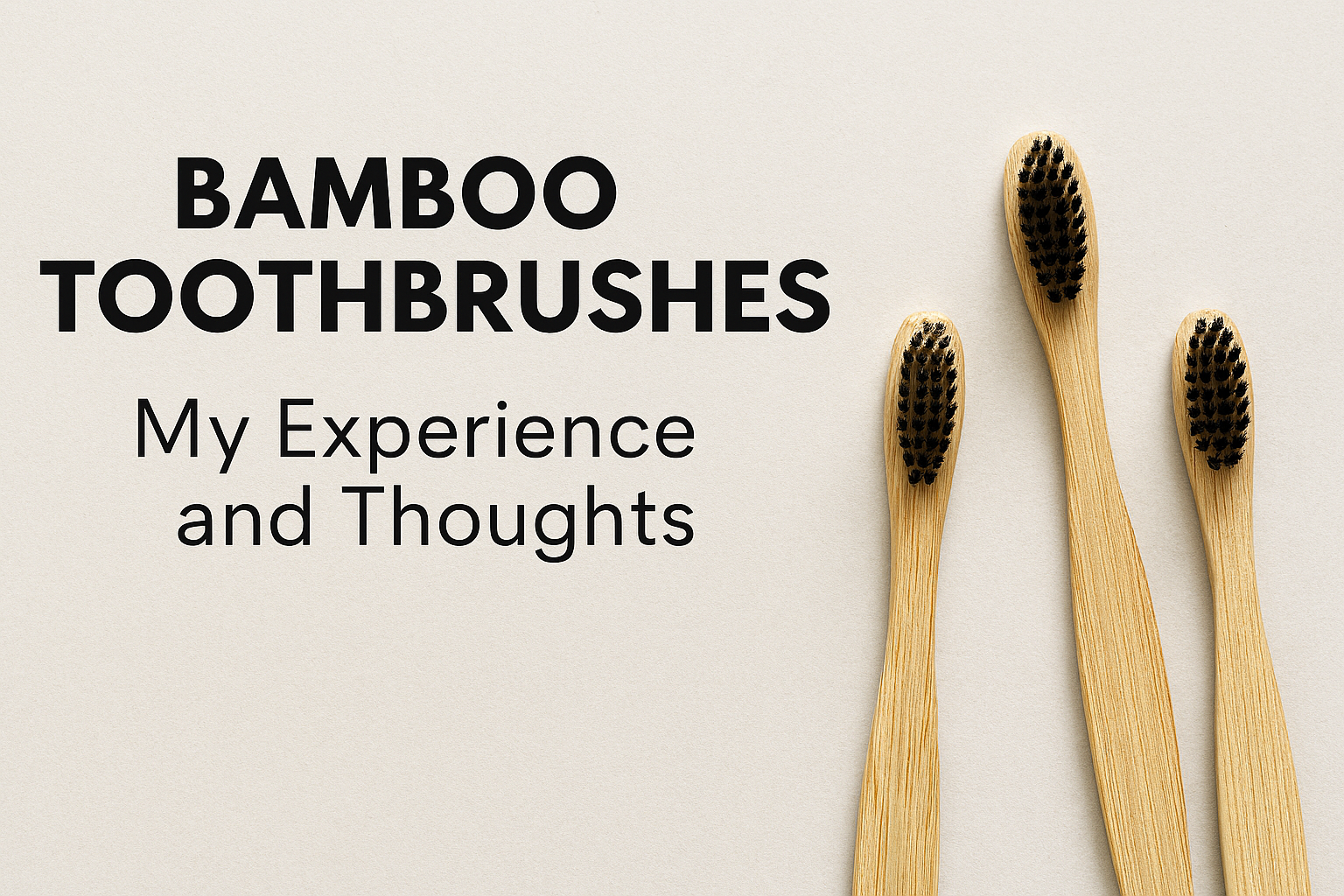
Over the past 6–9 months, I’ve tried a variety of bamboo toothbrushes. Overall, I’ve found that they wear well, do the job just as effectively as conventional plastic toothbrushes, feel nice to hold, and — most importantly for me — can usually be disposed of with a much clearer conscience. Switching to a bamboo toothbrush is often one of the first swaps people make when trying to reduce plastic waste, and for good reason. However, as I’ve learned, not all bamboo toothbrushes are created equal, and some marketing claims deserve a closer look. Estimated reading time: 5 minutes ✅ Why Bamboo Toothbrushes Are a Popular Zero‑Waste Swap Traditional plastic toothbrushes are almost impossible to recycle and are typically destined for landfill or the ocean. Bamboo toothbrushes, on the other hand, are often promoted as a more sustainable alternative because: Bamboo is a fast‑growing, renewable resource Handles are usually biodegradable or compostable Many brands use plastic‑free or recyclable packaging From a zero‑waste perspective, they’re a clear improvement — but that doesn’t mean they’re perfect. My Experience with Bamboo Toothbrushes Charcoal bristles are often advertised as antibacterial and better at removing plaque. Personally, I did notice that my teeth felt cleaner when using charcoal bristles. However, I later discovered that “BPA‑free charcoal bristles” may still contain synthetic materials, meaning the toothbrush is not fully compostable. ♻️ Are Bamboo Toothbrushes Actually Compostable? All of the bamboo toothbrushes I’ve tried have performed well and felt comparable to standard plastic toothbrushes. I didn’t feel like…

3 Comments
Photo by Mahyar Motebassem on Unsplash

Buy Local: Focus on Yarn

If, like me, often purchase beautiful yarns for knitting, crochet or even weaving, one small change you can make to reduce your carbon footprint is to #BuyLocal. We are not short of amazing yarn mills, spinners and/or even hand dyers in the UK – look out for them in your local shops or support them via their websites!

As you are looking through the below, PLEASE let me know if I have missed any and I will add them!

Estimated reading time: 14 minutes

(more…)

1 Comment

Food Wraps that Won’t Cost the Earth

Reusable wraps made with bees wax or (vegan) soy, which just required a quick wash with cool, soapy water after use.

Why swap plastic wrap for reusable food wraps?

Plastic cling film is single-use, petroleum-based, and rarely recyclable. It’s used for minutes but can persist in the environment for hundreds of years. Reusable food wraps offer a practical alternative that fits easily into everyday life, helping to reduce household plastic waste without sacrificing convenience.

Estimated reading time: 4 minutes

(more…)

1 Comment

My Pledge to the Planet: Progress

I am trying my utmost to reduce my waste by 85% before the end of the year. This post is an update on my zero waste pledge progress. It is not that I never recycled (I always have done!), or that I was particularly wasteful, but that there is more that I can do.

What is in place

  • Avoidance of ANY purchases with plastic packaging (yes, this causes funny looks in Tesco when I have veg loose in a bag for life, but what is the point in putting them in plastic for a 5 min journey, when I already have a canvas carrying implement?!)
  • Up-cycling of anything possible: for a friends kids to make stuff with (the cardboard rolls in the middle of wrapping paper are, e.g. excellent swords!)
  • Re-use of boxes and envelopes.
  • Slow integration of alternative products with waste reduction and environmental friendliness as core motivations for choice.

Estimated reading time: 3 minutes

(more…)

0 Comments

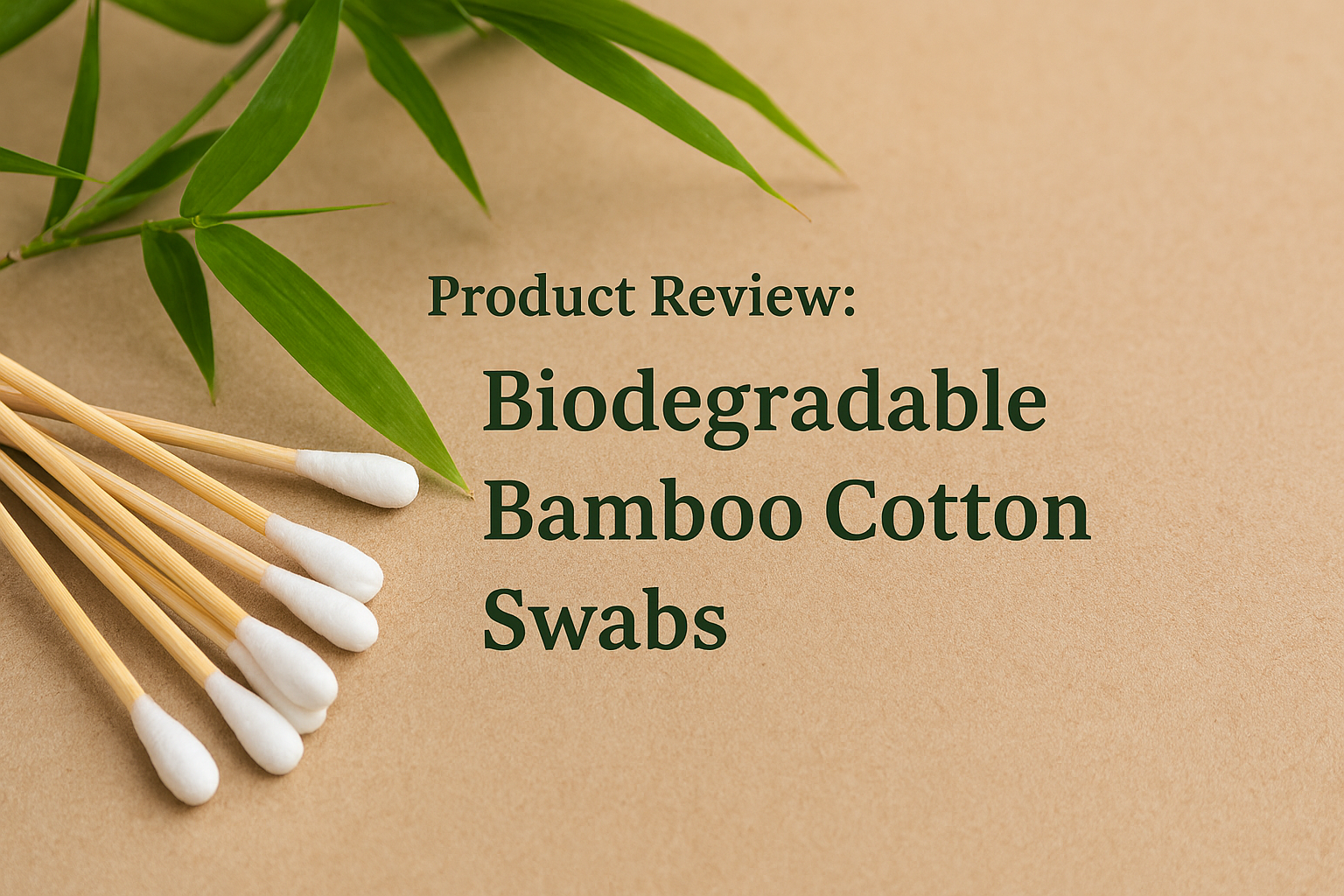
Product Review: Biodegradable Bamboo Cotton Swabs

When I first started taking a closer look at the everyday items I use, I was surprised by how many contained unnecessary plastic. One of the simplest — and most overlooked — swaps was cotton buds (or cotton swabs). They’re used for seconds, then thrown away, yet conventional plastic cotton buds can take hundreds of years to break down, often ending up in landfill or, worse, our oceans.

Wanting to reduce my plastic waste without giving up convenience entirely, I started looking for a more sustainable alternative. That’s how I came across biodegradable bamboo cotton swabs — and they’ve since become a staple in my low‑waste bathroom

Estimated reading time: 4 minutes

(more…)

3 Comments