Brand Review: Ecover

Ecover is often promoted as an eco‑friendly household cleaning brand—but how sustainable is it really? This Ecover Brand Review: Is Ecover Really Eco‑Friendly? will help you understand what makes the brand stand out.

In this Ecover brand review, we take a closer look at its credentials and try to answer the question raised in the Ecover Brand Review: Is Ecover Really Eco‑Friendly?

I have been using the Ecover range of cleaning products for well over a decade now. While they never completely replaced my trusty powder laundry detergent (I sometimes felt clothes weren’t quite as clean as I wanted), they did replace my fabric conditioner and several other household cleaning products that I used regularly.

Ecover describes its approach as a holistic one, with people and planet kept firmly in mind. They state that they have strict standards for ingredient selection and assess more than a dozen attributes for each ingredient, including biodegradability, skin and eye irritation, and aquatic toxicity. On paper, this all sounds very reassuring and is discussed further within this Ecover Brand Review: Is Ecover Really Eco‑Friendly?

However, as with many “eco” brands, Ecover falls into what I think of as a starting point. In this Ecover brand review, I see their products as a starting point on a low‑waste or zero‑waste journey rather than a final destination..

Estimated reading time: 3 minutes

(more…)

0 Comments

For those who sew: Gütermann Recycled Sewing Thread

Gutermann Recycled Sew-All Thread Set 20pk - Basics
Gutermann Recycled Sew-All Thread Set 20pk – Basics

As an avid sewer – and I know that I am not alone here – I take pride in repairing and upcycling items in order to lower my carbon footprint. I also know Gütermann to be one of the best brands of sewing thread in the world! I have recently discovered Gütermann Sew-all Thread rPET. Not only can they be implemented for a variety of fabrics and stitches, but they are made from 100 % recycled polyester!

Estimated reading time: 3 minutes

(more…)

0 Comments

Product Review: Vegan Scourer Brush Ecococonut

When shopping on Peace With The Wild, I found the Vegan Scourer Brush by Ecococonut, a plastic‑free alternative to conventional washing‑up scourers. As someone trying to reduce waste in everyday cleaning, I’m always on the lookout for swaps that actually work — not just ones that sound good in theory.

These vegan scourer brushes are 100% plastic free and come in a two‑pack, making them a practical option for low‑waste kitchens.

Estimated reading time: 3 minutes

(more…)

0 Comments
Jungle Culture Eco-friendly Safety Razor for Women & Men

Product Review: Jungle Culture Safety Razor

Like many women, I fully support embracing body hair. However, I personally dislike how it feels under my clothing. Because I have PCOS (Polycystic Ovarian Syndrome), excessive hair growth is something I deal with daily. This means shaving my legs and arms very frequently.

When you have to shave this often, finding a razor that actually works is essential.

Jungle Culture may have the answer…

Estimated reading time: 7 minutes

(more…)

3 Comments
Jungle Culture Bamboo Cutlery

#PlantBamboo for Cutlery

Why Bamboo Cutlery Matters

Single‑use plastic cutlery is one of the most common forms of plastic pollution found in household waste, takeaway packaging, and litter clean‑ups. Designed to be used for just a few minutes, plastic forks, knives, and spoons can persist in the environment for hundreds of years. Then, they break down into microplastics that contaminate soil, waterways, and food chains.

Bamboo offers a compelling alternative. As one of the fastest‑growing plants on Earth, bamboo can be harvested without killing the plant. This makes it a highly renewable material. Some species are capable of growing over a metre per day. As a result, bamboo forests regenerate quickly while absorbing carbon dioxide and producing oxygen at higher rates than many trees.

When used for cutlery, bamboo is lightweight, durable, and naturally antibacterial. Unlike plastic, it is made from a natural material that can safely return to the earth at the end of its life when untreated. Choosing bamboo cutlery is not just a swap — it is a small but meaningful step in supporting regenerative materials. It also reduces reliance on fossil fuels and moves us away from a throwaway culture.

(more…)

6 Comments
Photo by Micheile Henderson on Unsplash fabric

#PlantBamboo for Fabrics, Yarn & Fashion

“35% of all micro plastics in the world’s oceans are from synthetic textiles”

International Union for Conservation of Nature

There are over 1600 known species of Bamboo across many parts of the tropics and subtropics, with thousands of uses – including for the production of fabrics and yarn for the fashion industry.

Why Bamboo Is Being Promoted in Fashion & Textiles

Bamboo has become a popular material in the sustainable fashion conversation because it grows extremely quickly, requires no replanting after harvest, and can thrive without large amounts of pesticides or fertiliser. As a plant, bamboo has a relatively low land footprint and can absorb significant amounts of carbon dioxide during growth.

This has led to bamboo being marketed as a climate‑friendly alternative to conventional cotton and petroleum‑based synthetic fibres.

However, the environmental impact of bamboo fabrics depends less on the plant itself and more on how it is processed.

Estimated reading time: 4 minutes

(more…)

8 Comments
Bamboo - a beautiful green feeling by Clement Souchet on Unsplash

World Bamboo Day 18th September

World Bamboo Day, celebrated annually on 18th September, is dedicated to raising awareness of bamboo and its importance in promoting sustainability, biodiversity, and climate‑positive lifestyles.

Bamboo is often described as one of the most sustainable materials on the planet – and for good reason. It is technically a grass, not a tree, and can grow incredibly quickly without the need for pesticides or fertilisers. Furthermore, in some species, bamboo can grow up to one metre per day, making it a renewable resource with huge potential to reduce our reliance on less sustainable materials.

From a zero‑waste perspective, bamboo really stands out. It is biodegradable, versatile, and naturally strong, which means it can be used to replace plastics and other high‑impact materials in many everyday products. From bamboo toothbrushes and reusable kitchenware to textiles and flooring, bamboo alternatives are becoming increasingly accessible.

Estimated reading time: 3 minutes

(more…)

8 Comments

Product Review: Salt of the Earth

This product intrigued me – not only is it plastic free, but it also consists of the subject of my PhD: Salt! This is my Salt of the Earth deodorant review.

Salt of the Earth crystal deodorants work by leaving an invisible layer of mineral salt on the skin which work to inhibit the growth of odour causing bacteria. This is a good product if you wish to avoid plastic packaging!

Estimated reading time: 3 minutes

(more…)

0 Comments

Bamboo Toothbrushes

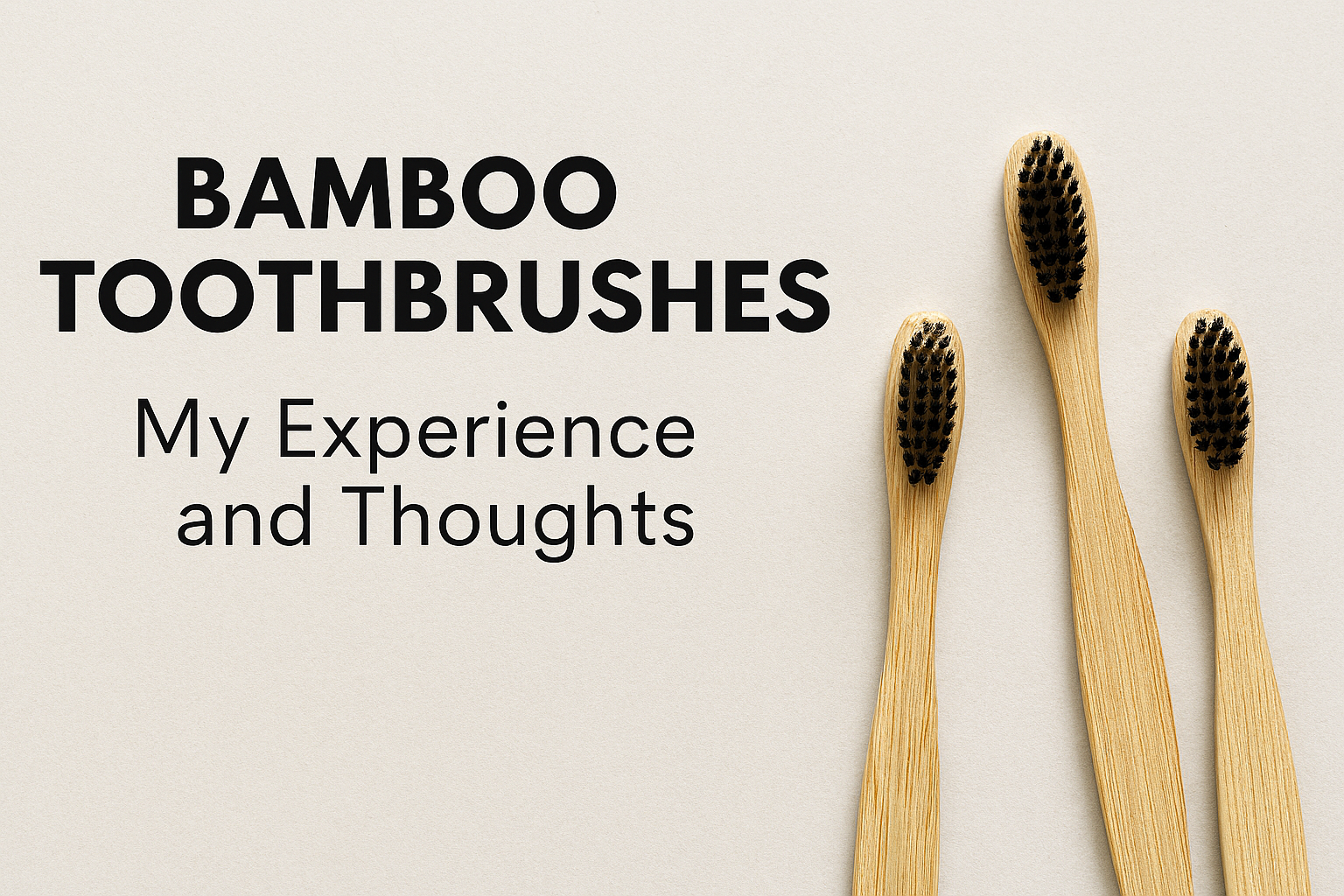
Over the past 6–9 months, I’ve tried a variety of bamboo toothbrushes. Overall, I’ve found that they wear well, do the job just as effectively as conventional plastic toothbrushes, feel nice to hold, and — most importantly for me — can usually be disposed of with a much clearer conscience. Switching to a bamboo toothbrush is often one of the first swaps people make when trying to reduce plastic waste, and for good reason. However, as I’ve learned, not all bamboo toothbrushes are created equal, and some marketing claims deserve a closer look. Estimated reading time: 5 minutes ✅ Why Bamboo Toothbrushes Are a Popular Zero‑Waste Swap Traditional plastic toothbrushes are almost impossible to recycle and are typically destined for landfill or the ocean. Bamboo toothbrushes, on the other hand, are often promoted as a more sustainable alternative because: Bamboo is a fast‑growing, renewable resource Handles are usually biodegradable or compostable Many brands use plastic‑free or recyclable packaging From a zero‑waste perspective, they’re a clear improvement — but that doesn’t mean they’re perfect. My Experience with Bamboo Toothbrushes Charcoal bristles are often advertised as antibacterial and better at removing plaque. Personally, I did notice that my teeth felt cleaner when using charcoal bristles. However, I later discovered that “BPA‑free charcoal bristles” may still contain synthetic materials, meaning the toothbrush is not fully compostable. ♻️ Are Bamboo Toothbrushes Actually Compostable? All of the bamboo toothbrushes I’ve tried have performed well and felt comparable to standard plastic toothbrushes. I didn’t feel like…

3 Comments

Food Wraps that Won’t Cost the Earth

Reusable wraps made with bees wax or (vegan) soy, which just required a quick wash with cool, soapy water after use.

Why swap plastic wrap for reusable food wraps?

Plastic cling film is single-use, petroleum-based, and rarely recyclable. It’s used for minutes but can persist in the environment for hundreds of years. Reusable food wraps offer a practical alternative that fits easily into everyday life, helping to reduce household plastic waste without sacrificing convenience.

Estimated reading time: 4 minutes

(more…)

1 Comment