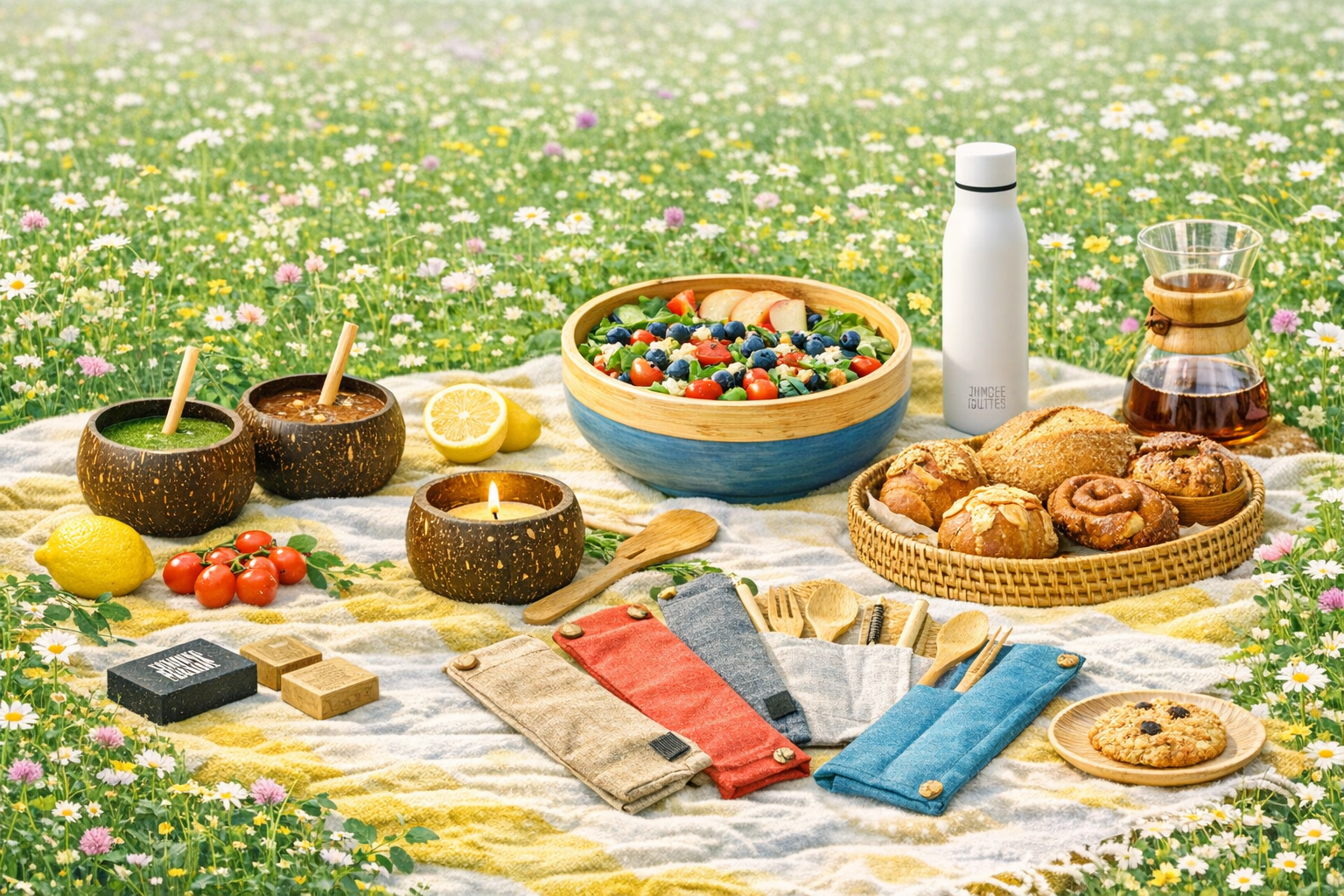
🌿 Low-Waste Picnic Kit

Simple Swaps for a Greener Outdoor Adventure

Earth Month Guide • Outdoors • Zero Waste Picnic

A low-waste picnic isn’t about perfection — it’s about packing with intention, choosing reusables over disposables, and celebrating the outdoors without leaving a trace. Whether you’re heading to the beach, the park, or your favourite coastal nook, a thoughtfully curated picnic kit makes sustainable living feel effortless.

This guide walks you through the essentials of a zero waste picnic, featuring some of the beautiful, ethically made pieces from Jungle Culture, whose artisan-crafted, plastic-free products align perfectly with the Zero Waste Llama ethos, amongst other Zero-Waste items of interest.

(more…)

4 Comments

Product Review: Vegan Scourer Brush Ecococonut

When shopping on Peace With The Wild, I found the Vegan Scourer Brush by Ecococonut, a plastic‑free alternative to conventional washing‑up scourers. As someone trying to reduce waste in everyday cleaning, I’m always on the lookout for swaps that actually work — not just ones that sound good in theory.

These vegan scourer brushes are 100% plastic free and come in a two‑pack, making them a practical option for low‑waste kitchens.

Estimated reading time: 3 minutes

(more…)

0 Comments
Jungle Culture Bamboo Cutlery

#PlantBamboo for Cutlery

Why Bamboo Cutlery Matters

Single‑use plastic cutlery is one of the most common forms of plastic pollution found in household waste, takeaway packaging, and litter clean‑ups. Designed to be used for just a few minutes, plastic forks, knives, and spoons can persist in the environment for hundreds of years. Then, they break down into microplastics that contaminate soil, waterways, and food chains.

Bamboo offers a compelling alternative. As one of the fastest‑growing plants on Earth, bamboo can be harvested without killing the plant. This makes it a highly renewable material. Some species are capable of growing over a metre per day. As a result, bamboo forests regenerate quickly while absorbing carbon dioxide and producing oxygen at higher rates than many trees.

When used for cutlery, bamboo is lightweight, durable, and naturally antibacterial. Unlike plastic, it is made from a natural material that can safely return to the earth at the end of its life when untreated. Choosing bamboo cutlery is not just a swap — it is a small but meaningful step in supporting regenerative materials. It also reduces reliance on fossil fuels and moves us away from a throwaway culture.

(more…)

6 Comments
Jungle Culture - Straws in a pile

🌱 #PlantBamboo for Straws: A Simple Action With a Big Impact

Plastic straws might seem small, but their environmental impact is anything but. Billions are used globally each year, often for just minutes, before ending up in landfill, incineration, rivers, or the ocean. While reusable alternatives like metal, glass, and silicone straws are growing in popularity, bamboo straws stand out as one of the most genuinely sustainable options. One brilliant idea is to plant bamboo for straws, supporting an eco-friendly cycle from the source to the finished product.

Bamboo is fast‑growing, renewable, and naturally biodegradable. It requires no pesticides, very little water, and absorbs more carbon dioxide than many trees. When responsibly grown, bamboo can be harvested without killing the plant — making it an ideal material for zero‑waste products.

(more…)

6 Comments

Product Review: Dingbats* Notebook

I had never heard of Dingbats* until Christmas Day 2020 when my best friend (sharing my love of notebooks/bullet journals, and knowing that I was working towards a Zero Waste Life – and blogging in the process), gave me a Dingbats* notebook as a gift.  

In the pocket, at the back of the notebook, was a small leaflet, which briefly detailed their product ranges and highlighted key features (discussed below). I tried them, following the link on the leaflet to find out more, then my love affair with Dingbats* began… in fact, 3 months later I ordered a further 5 journals, as well as some lovely dual-tipped pens!! 

Why? What makes Dingbats* different/better than the Moleskine notebooks, which I have used for decades?

If you’re trying to live more sustainably but refuse to give up beautiful stationery, Dingbats* notebooks might just be your perfect middle ground.

What truly sets Dingbats* apart is sustainability.
It isn’t an afterthought.
It’s built into every part of the product lifecycle.

In this Dingbats notebooks review, I share my long‑term experience using their journals as part of a zero waste lifestyle.

Read on & add the Zero Waste Llama discount code – LLAMA10 – for a 10% discount on your first order!

Estimated reading time: 12 minutes

(more…)

0 Comments

Product Review: Salt of the Earth

This product intrigued me – not only is it plastic free, but it also consists of the subject of my PhD: Salt! This is my Salt of the Earth deodorant review.

Salt of the Earth crystal deodorants work by leaving an invisible layer of mineral salt on the skin which work to inhibit the growth of odour causing bacteria. This is a good product if you wish to avoid plastic packaging!

Estimated reading time: 3 minutes

(more…)

0 Comments

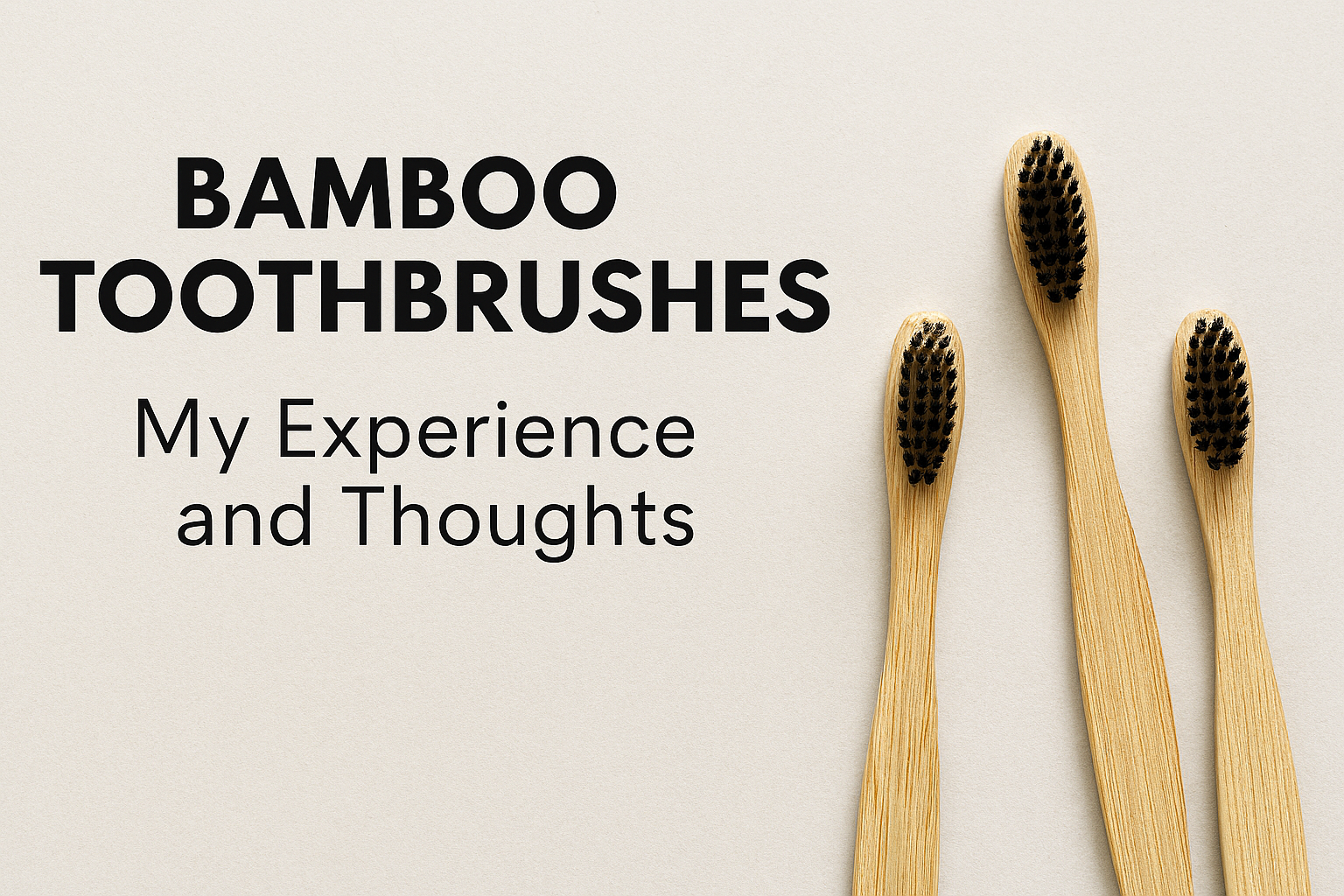
Bamboo Toothbrushes

Over the past 6–9 months, I’ve tried a variety of bamboo toothbrushes. Overall, I’ve found that they wear well, do the job just as effectively as conventional plastic toothbrushes, feel nice to hold, and — most importantly for me — can usually be disposed of with a much clearer conscience. Switching to a bamboo toothbrush is often one of the first swaps people make when trying to reduce plastic waste, and for good reason. However, as I’ve learned, not all bamboo toothbrushes are created equal, and some marketing claims deserve a closer look. Estimated reading time: 5 minutes ✅ Why Bamboo Toothbrushes Are a Popular Zero‑Waste Swap Traditional plastic toothbrushes are almost impossible to recycle and are typically destined for landfill or the ocean. Bamboo toothbrushes, on the other hand, are often promoted as a more sustainable alternative because: Bamboo is a fast‑growing, renewable resource Handles are usually biodegradable or compostable Many brands use plastic‑free or recyclable packaging From a zero‑waste perspective, they’re a clear improvement — but that doesn’t mean they’re perfect. My Experience with Bamboo Toothbrushes Charcoal bristles are often advertised as antibacterial and better at removing plaque. Personally, I did notice that my teeth felt cleaner when using charcoal bristles. However, I later discovered that “BPA‑free charcoal bristles” may still contain synthetic materials, meaning the toothbrush is not fully compostable. ♻️ Are Bamboo Toothbrushes Actually Compostable? All of the bamboo toothbrushes I’ve tried have performed well and felt comparable to standard plastic toothbrushes. I didn’t feel like…

3 Comments