Every Earth Day invites the same question:
what kind of relationship do we want with the planet that sustains us?
One important topic to consider is regenerative renewable energy and its role in shaping a sustainable future.
For years, the environmental conversation focused on doing less — using less energy, creating less waste, causing less harm. But a new story is emerging. Across the UK and beyond, renewable energy is evolving into something more ambitious: energy that restores ecosystems, supports farming, and strengthens communities while producing clean power.
This is regenerative energy — and it’s already taking root.
Estimated reading time: 5 minutes
🌱 From Land Use to Land Sharing
One of the biggest myths about renewable energy is that it competes with food production or nature. Emerging research tells a very different story.
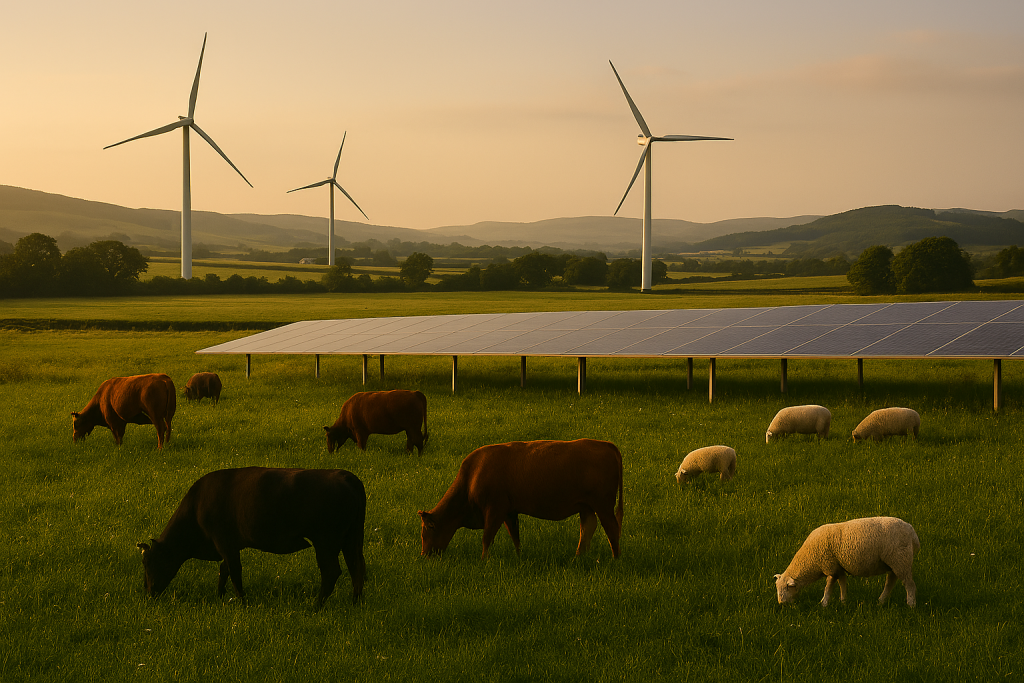
Through a practice known as agrivoltaics, solar energy is being designed to share land with agriculture and wildlife rather than displacing it. When solar farms are planned as living landscapes rather than fenced industrial spaces, they can:
- increase soil moisture and reduce heat stress
- support grazing animals such as sheep
- boost pollinator populations through wildflower planting
- eliminate herbicide use
- create wildlife corridors in intensively farmed areas
These solar sites don’t replace nature — they help it recover.
🐑 Grazing Animals: Unexpected Climate Allies
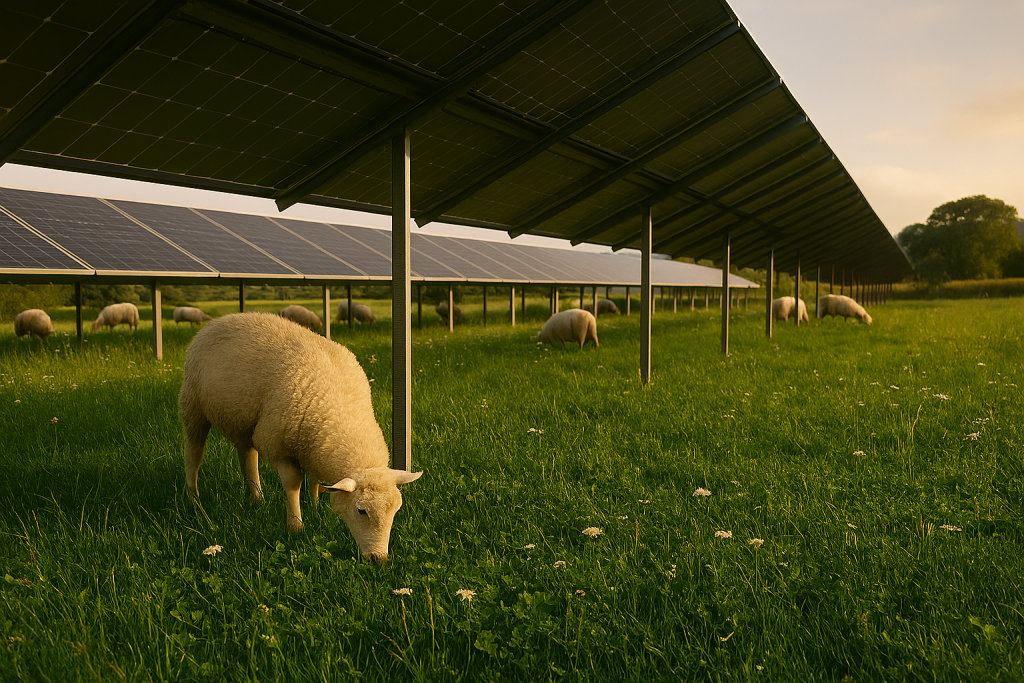
Sheep grazing beneath solar panels has become one of the most successful examples of land sharing in action.
Farmers across the UK report that solar grazing:
- provides reliable pasture
- improves animal welfare through shade and shelter
- reduces vegetation management costs
- keeps land in active agricultural use
Animals maintain the land naturally, and the land remains productive. It’s simple, practical, and effective — proof that renewable energy can work with farming rather than against it.
🌼 Solar Meadows and the Return of Life
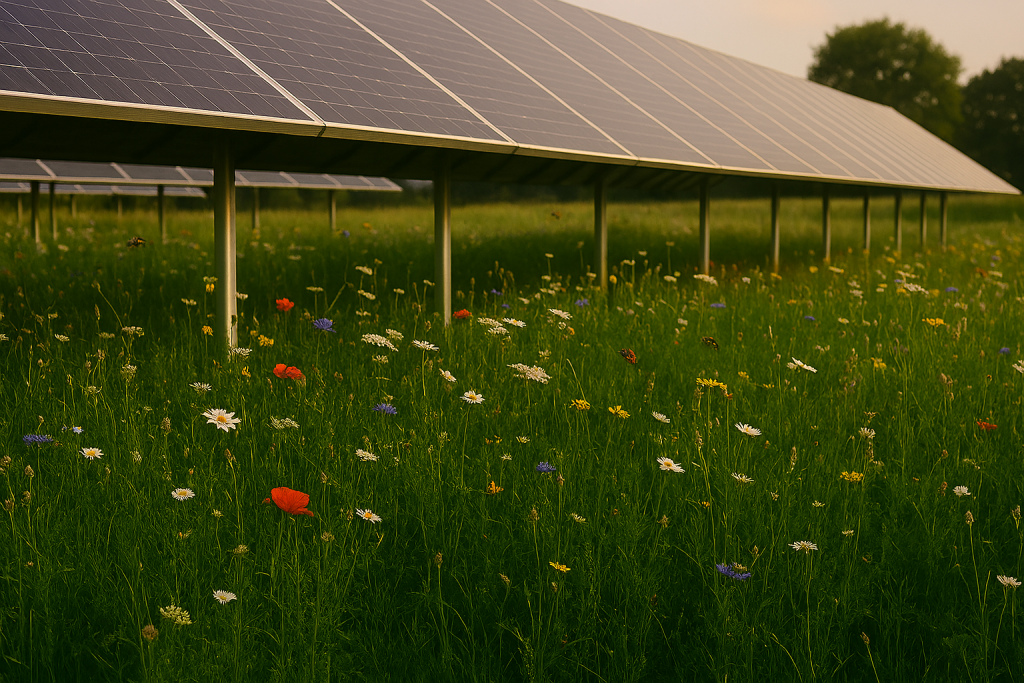
When solar parks replace short turf with native wildflowers, the benefits multiply.
These solar meadows have been shown to:
- dramatically increase insect abundance within a few years
- support bees, butterflies, and beetles
- improve soil structure and water retention
- increase biodiversity across agricultural landscapes
At a time of global pollinator decline, these restored habitats play a vital role in repairing damaged ecosystems.
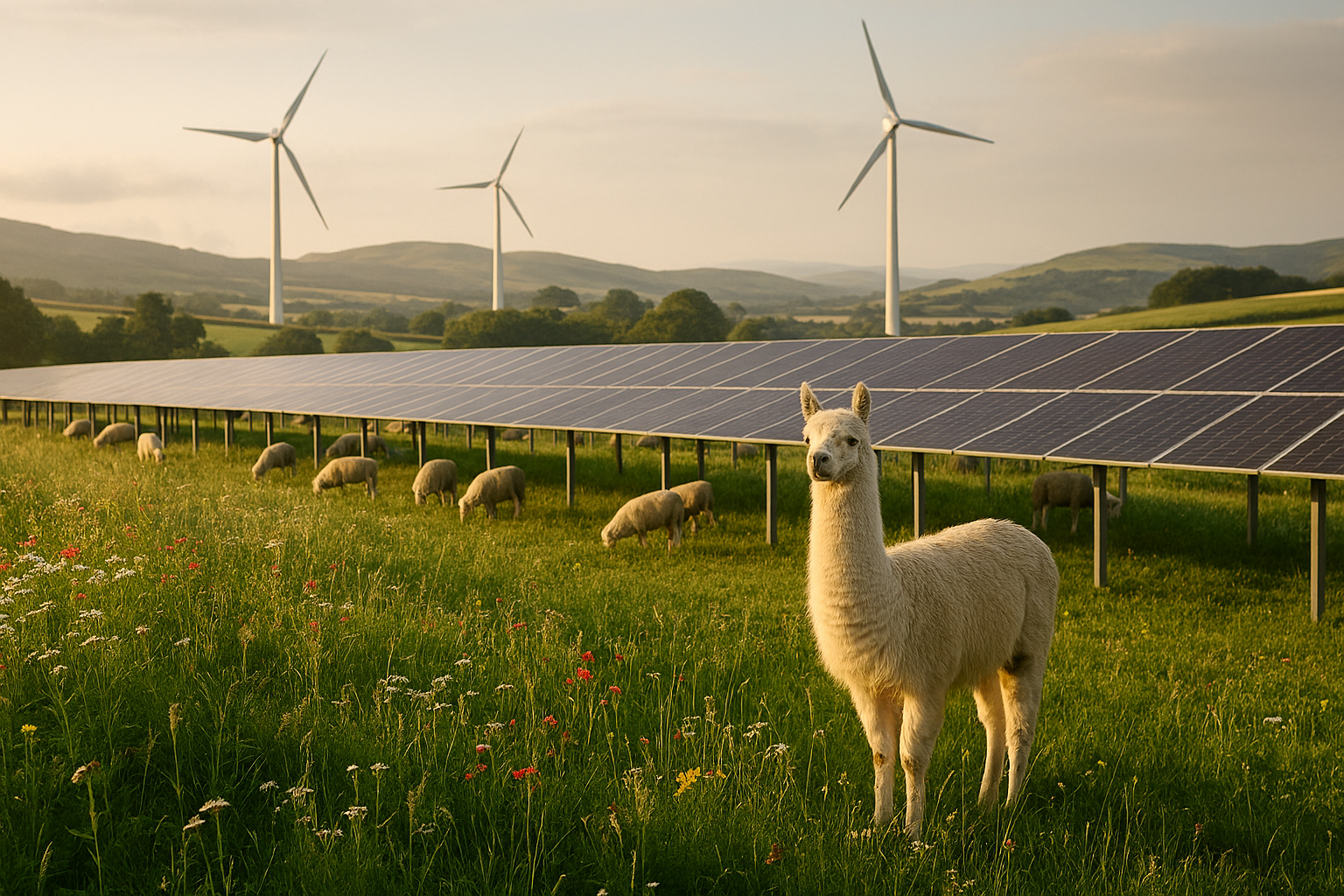
🦙 The Zero Waste Llama: A Symbol That Fits
At Zero Waste Llama, we use the llama as a symbol for a simple idea:
nothing in nature is wasted, and our energy systems shouldn’t be either.
Llamas — like sheep — are gentle grazers with a low impact on soil. They’re often used as guardian animals in mixed herds and fit naturally into regenerative farming systems. In landscapes where machinery is limited and biodiversity is encouraged, they represent balance, patience, and circular thinking.
The “zero‑waste llama” isn’t just a mascot — it’s a reminder that systems can be designed so every output becomes an input, and nothing is discarded.
🌬️ Wind Energy: A Lesson We’ve Known for Decades
Long before agrivoltaics became a buzzword, wind energy quietly demonstrated that clean power could coexist with working landscapes.
For more than 25 years, I’ve photographed wind farms across Europe. What I’ve seen repeatedly is simple:
- crops grow up to turbine bases
- cattle and sheep graze beneath the blades
- the land remains open, productive, and alive
Wind taught us early on that renewable energy doesn’t have to dominate the land — it can belong to it. Today’s regenerative solar projects are building on that same principle.
🌞 Regenerative Energy: The Future Earth Day Points Toward
The next generation of renewable energy goes beyond “low‑impact.” It aims for positive impact.
Regenerative energy projects are designed to:
- restore soil health
- support wildlife
- strengthen local farming economies
- reduce carbon emissions
- keep communities involved and empowered
This is energy that doesn’t just replace fossil fuels — it helps the planet heal.
🌎 A New Earth Day Story
For too long, environmentalism has been framed around sacrifice. But emerging land‑sharing renewables offer something more hopeful:
- farmers gain new income streams
- wildlife returns to managed landscapes
- communities produce their own clean power
- ecosystems grow more resilient
- and renewable energy becomes part of the landscape, not a threat to it
This Earth Day 2026, the message is clear:
We don’t just need cleaner energy.
We need energy that gives back more than it takes.
That future is no longer theoretical.
It’s already being built — gently, intelligently, and in partnership with the land.
Key Takeaways
- Regenerative renewable energy focuses on restoring ecosystems while providing clean power, unlike traditional energy models.
- Agrivoltaics allows solar farms to coexist with agriculture and wildlife, enhancing soil health and supporting biodiversity.
- Grazing animals, like sheep and llamas, promote land health and reduce costs while keeping land productive and in agricultural use.
- Solar meadows, filled with native wildflowers, increase insect populations and improve ecosystems during a global pollinator decline.
- The future of renewable energy aims for positive impacts that strengthen communities, support wildlife, and restore natural landscapes.


