
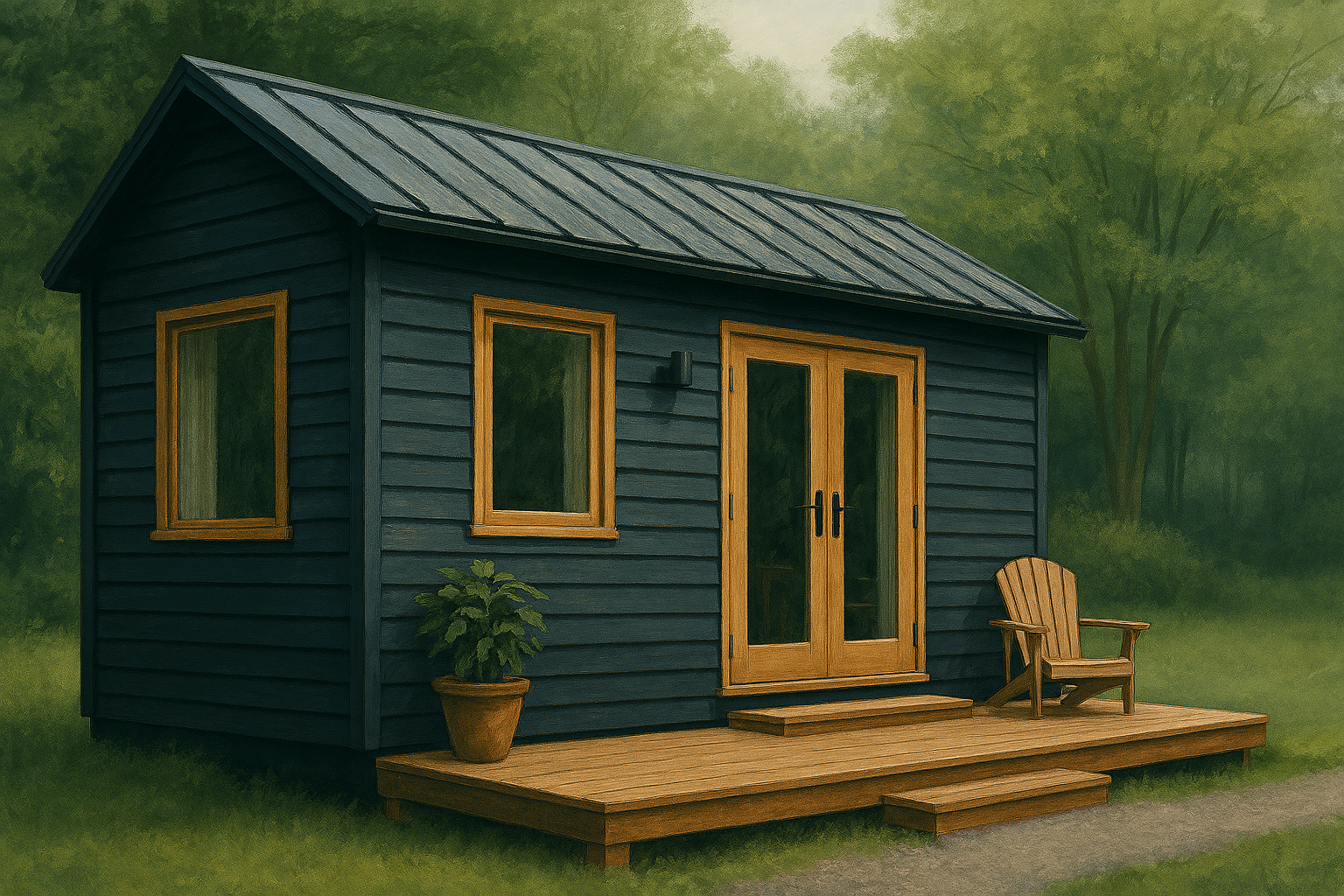
The tiny home movement is part of a wider global shift towards minimalism, intentional living, and lower‑impact lifestyles. While it has gained momentum in countries such as the US and parts of Europe, Britain has traditionally been slower to embrace the idea. Recently, though, that seems to be changing.
At its heart, the movement asks a simple but uncomfortable question: how much space do we really need to live well? When we strip away excess possessions and unused rooms, many of us begin to realise that modern housing often encourages far more consumption than comfort.
Estimated reading time: 4 minutes
Seeing downsizing in action

My interest in tiny homes was sparked by a friend who lived on a narrowboat for several years. Watching someone adapt to a much smaller living space was quietly eye‑opening. Storage was limited, so choices had to be made. At first, some belongings were kept elsewhere “just in case”.
Over time, it became clear that those stored items were rarely — if ever — needed. After months had passed, the realisation set in: paying to store things that weren’t actually part of daily life made very little sense.
What stood out most wasn’t sacrifice, but freedom. Living with less seemed to simplify decisions, reduce stress, and encourage a more intentional way of living. That experience led me to explore the wider tiny home movement and what it might offer beyond personal lifestyle choices.
More than just small spaces
Tiny homes are often misunderstood as temporary or compromised housing. In reality, they are fully functional homes, designed around efficient layouts, multifunctional spaces, and thoughtful design.
Clever storage, modular elements, and purposeful use of space can make compact homes feel surprisingly comfortable. Rather than expanding square footage, the focus shifts to how space is used, not how much of it there is.
Environmental and social benefits
Beyond lifestyle appeal, tiny and modular homes raise important questions about sustainability and housing in Britain.
From an environmental perspective, smaller homes generally:
- Require fewer building materials
- Have lower embodied carbon
- Use significantly less energy for heating and cooling
- Encourage more mindful consumption overall

A well‑insulated, compact home is naturally more energy‑efficient — warmer in winter, cooler in summer, and cheaper to run. At a time of rising energy costs and growing climate concern, this efficiency matters.
There’s also a wider social conversation happening. Tiny and modular homes are increasingly discussed in relation to:
- Housing affordability
- Land use and density
- Transitional or temporary housing
- Community‑scale developments
They aren’t a universal solution, but they do challenge the assumption that bigger homes automatically mean better living.
When “eco” is also logical
Sustainable living is often framed as expensive or idealistic. In reality, it is frequently the most logical option. If environmental costs aren’t paid upfront, they are usually deferred — absorbed by ecosystems, communities, or future generations instead.

Choosing durable materials, good insulation, and energy‑efficient design may involve slightly higher initial costs, but the long‑term benefits are substantial. This is where the idea of eco‑logical living becomes clear: sustainability isn’t just ethical, it’s practical.
Many modern small‑scale homes now include options such as:
- High‑performance insulation
- Solar energy systems
- Green or living roofs
- Reclaimed or upcycled materials
These features help homes blend more gently into their surroundings while reducing long‑term environmental impact.
Is Britain ready?
Planning regulations, land availability, and cultural attitudes have made tiny homes more challenging in the UK than elsewhere. Those barriers haven’t disappeared, but attitudes are slowly shifting.
Rising housing costs, environmental awareness, and changing ideas about what “home” really means are pushing the conversation forward. Tiny homes won’t suit everyone — and they don’t need to — but they offer a valuable alternative to conventional housing models.
We all need somewhere to call home. That home doesn’t have to be oversized, overcomplicated, or environmentally costly. Sometimes, less really is enough.
Key Takeaways
- The tiny home movement in Britain emphasizes minimalism, intentional living, and lower-impact lifestyles.
- Tiny homes are fully functional and focus on efficient use of space rather than just size.
- Environmental benefits include lower energy consumption and reduced building materials, making them more sustainable.
- The movement addresses issues like housing affordability and community development, challenging larger home assumptions.
- Cultural attitudes and regulations are evolving, making tiny homes a viable alternative to conventional housing in the UK.