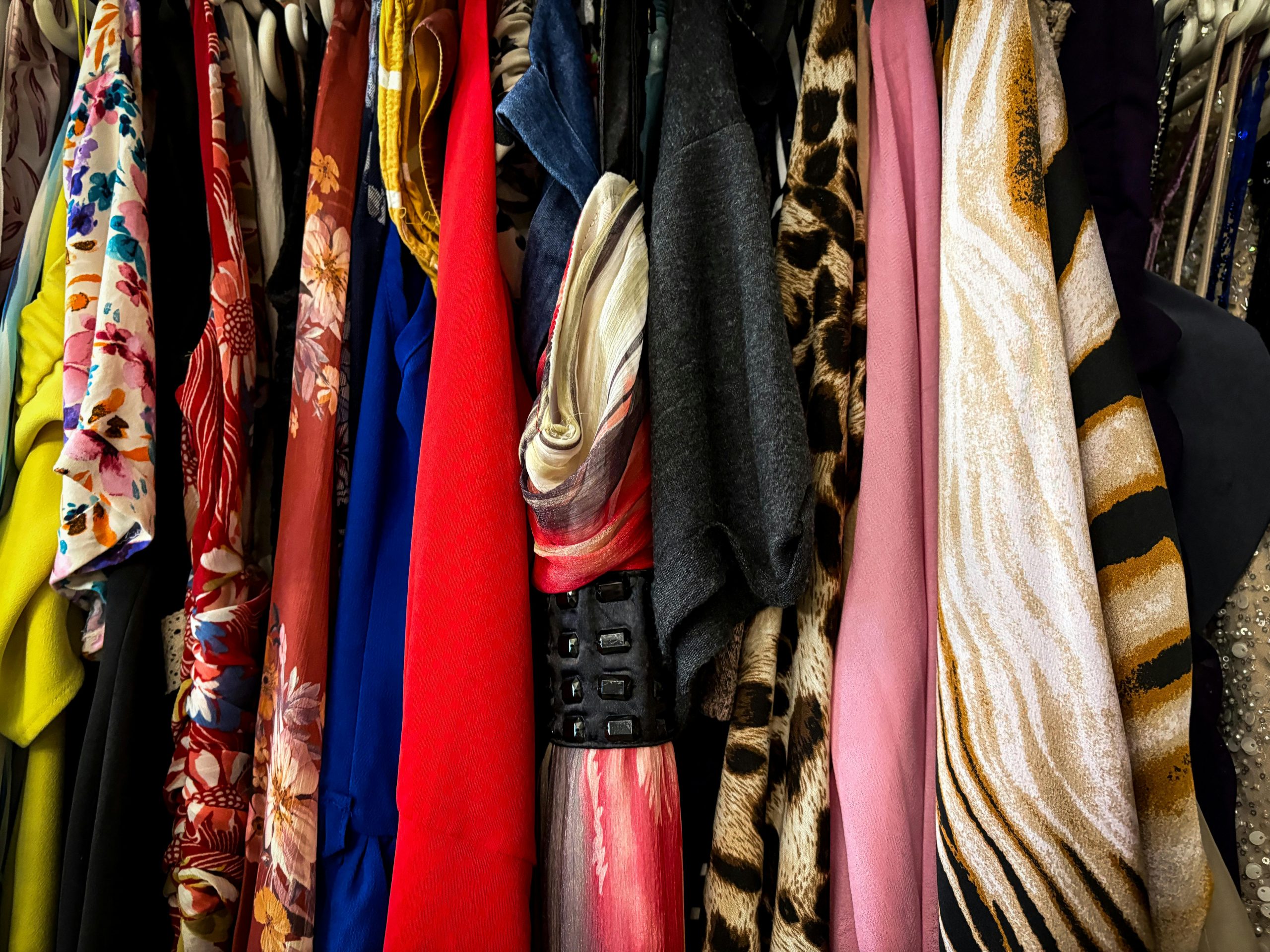
A display of jeans showing a beautiful array of decorated repairs. Text reads "Customise. Personalise. Repair."
Photo by Luba Glazunova on Unsplash

The Joy of Darning & Visible Mending

Repairing Clothes as an Act of Radical Care

Fast fashion teaches us to replace.
Mending teaches us to care.

Darning and visible mending are more than old‑fashioned skills — they are powerful, practical tools for reducing waste, saving money, and reconnecting with the clothes we already own. Repairing garments slows consumption, challenges throwaway culture, and turns wear and tear into something meaningful. Darning and visible mending offer a creative and sustainable approach to repairing clothes.

This guide explores traditional darning, visible mending, and modern surface darning techniques, inspired by both historic repair practices and contemporary makers such as Ministry of Mending, who actively champion joyful, approachable clothing repair.

Estimated reading time: 6 minutes

(more…)

0 Comments

🦙 The True Cost of Ultra‑Fast Fashion

Introduction: When Cheap Isn’t Cheerful (or Logical)

In a cost‑of‑living crisis, platforms like Shein and Temu don’t just feel tempting — they feel reasonable. When money is tight, affordability matters. Zero Waste Llama is not here to shame anyone for needing clothes.

But zero waste isn’t just about what fits in your bin.

It’s about where waste begins — and ultra‑fast fashion begins with waste designed into the system.

This isn’t a story about individual bad choices. It’s about structural damage: environmental breakdown, labour exploitation, and supply chains engineered to move fast, stay opaque, and dodge accountability.

Because a £4 dress isn’t cheap.
It’s just very good at hiding the bill.

Zero waste isn’t about perfection — it’s about refusing systems built on disposability.

(more…)

0 Comments

🌊 Fashion’s Hidden Impact on the World’s Oceans

Microplastics, Toxic Chemicals & Why Fast Fashion Is an Ocean Emergency

Fast fashion doesn’t just harm people and the climate — it’s quietly poisoning our oceans. The issue of fashion microplastics ocean pollution is now a major environmental concern linked to the fast fashion industry.

From microplastic fibres released every time we wash our clothes to toxic dye runoff turning rivers into dead zones, the fashion industry has become one of the world’s most destructive — and least regulated — polluters.

At Zero Waste Llama, we believe understanding the problem is the first step toward dismantling it.

Estimated reading time: 5 minutes

(more…)

0 Comments

For those who sew: Gütermann Recycled Sewing Thread

Gutermann Recycled Sew-All Thread Set 20pk - Basics
Gutermann Recycled Sew-All Thread Set 20pk – Basics

As an avid sewer – and I know that I am not alone here – I take pride in repairing and upcycling items in order to lower my carbon footprint. I also know Gütermann to be one of the best brands of sewing thread in the world! I have recently discovered Gütermann Sew-all Thread rPET. Not only can they be implemented for a variety of fabrics and stitches, but they are made from 100 % recycled polyester!

Estimated reading time: 3 minutes

(more…)

0 Comments
Me modelling the Denim Blue Zero Waste Dress

Zero Waste Dressmaking

I finally have had time to write about the Zero Waste Dress pattern by Offset Warehouse!

Did you know that on average, 15% of fabric is wasted every time a garment is made? By designing clothes that are “zero waste”, this waste can be eliminated. The sewing pattern uses all the fabric, so nothing is thrown away.

Offset Warehouse have put together this simple zero waste dress pattern so you can try it for yourself – Which is exactly what I did!

UPDATE 2026 – Offset Warehouse is no longer in business: Please email me and I will send you a PDF copy of the pattern.

(more…)

0 Comments
@Abakhan 2022
@Abakhan 2022

Abakhan, Mostyn, Wales

Abakhan fabrics pride themselves on offering value for money throughout the vast range of Fabrics, Yarns, Crafts, Sewing Accessories and Haberdashery which they have on offer. Abakhan Mostyn is well known as a popular destination for crafters and sewists alike.

Abakhan in Mostyn, Wales is more than just a fabric shop – it’s a treasure trove for sewists, crafters, and anyone interested in ethical, low‑waste making. With its huge range of fabrics, yarns, haberdashery and famous fill‑a‑bag sales, Abakhan offers a rare opportunity to reuse surplus and deadstock materials that might otherwise go to waste.

Estimated reading time: 9 minutes

(more…)

2 Comments
Photo by Micheile Henderson on Unsplash fabric

#PlantBamboo for Fabrics, Yarn & Fashion

“35% of all micro plastics in the world’s oceans are from synthetic textiles”

International Union for Conservation of Nature

There are over 1600 known species of Bamboo across many parts of the tropics and subtropics, with thousands of uses – including for the production of fabrics and yarn for the fashion industry.

Why Bamboo Is Being Promoted in Fashion & Textiles

Bamboo has become a popular material in the sustainable fashion conversation because it grows extremely quickly, requires no replanting after harvest, and can thrive without large amounts of pesticides or fertiliser. As a plant, bamboo has a relatively low land footprint and can absorb significant amounts of carbon dioxide during growth.

This has led to bamboo being marketed as a climate‑friendly alternative to conventional cotton and petroleum‑based synthetic fibres.

However, the environmental impact of bamboo fabrics depends less on the plant itself and more on how it is processed.

Estimated reading time: 4 minutes

(more…)

8 Comments
Photo by Merve Sehirli Nasir on Unsplash buttons speaking

Become your own Brand: Sustainable sewing

In sewing an item from scratch – either using purchased materials or upcycling old items – you will experience the time, skill and patience it takes to create an item of clothing or accessory. Your journey to self sufficiency moves forward, and mending, fixing, upcycling and creating new, bespoke/tailored and exciting items becomes an enjoyable hobby: you become your own sustainable sewing brand!

If you are interested in sustainable sewing projects, or maybe have been motivated to look into this more during COVID-19 lockdowns, here are a few ideas, patterns and links – I just hope that in inspires just one other person to replace one item which they usually buy, with a home-made / upcycled item:  By sewing your own clothing and/or accessories, you are choosing a leisurely, more sustainable lifestyle and, at the same time, making a stand against fast fashion.

Estimated reading time: 6 minutes

(more…)

5 Comments

Upcycle Project: Old clothes to Origami bags!

Baggy Trousers

When I was 19 or 20, I remember actually holding a “funeral” for my favourite pair of patchwork batik baggy trousers… I lived in them… they were part of me… yet I was not in a position (at the time I was at university) to maintain their repairs… alas… they were falling apart… and my housemates staged an intervention and helped me to part with them… (I still miss that specific pair now! They were purples and dark blues, and so comfy…).

These days, I try and keep up with repairs – with such patchwork baggy trousers, this is fairly easy – just add another patch! However, there does come a point where you find yourself doing this far too regularly…

Fast fashion means we’re encouraged to throw clothes away as soon as they wear out — but what if those “unwearable” items could become something beautiful and useful instead? This upcycle project turns old clothes into simple origami-style fabric bags, giving much‑loved garments a second life while keeping textiles out of landfill.

Estimated reading time: 3 minutes

(more…)

3 Comments
Photo by Mahyar Motebassem on Unsplash

Buy Local: Focus on Yarn

If, like me, often purchase beautiful yarns for knitting, crochet or even weaving, one small change you can make to reduce your carbon footprint is to #BuyLocal. We are not short of amazing yarn mills, spinners and/or even hand dyers in the UK – look out for them in your local shops or support them via their websites!

As you are looking through the below, PLEASE let me know if I have missed any and I will add them!

Estimated reading time: 14 minutes

(more…)

1 Comment